**Date:** January 10, 2026
Government policy and industry investment are key drivers of the EV and home‑energy revolution. The Federal Highway Administration reports that the United States added **38,000 new public charging ports in 2024**, bringing the total to **over 206,000**【717955854046301†L190-L194】. President Biden’s goal of **500,000 public chargers by 2030** is backed by **$7.5 billion** from the Bipartisan Infrastructure Law【9870361495994111†L82-L84】 and additional state incentives.
### Tax Credits and Consumer Incentives
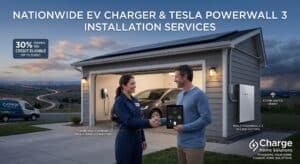
Tax policies continue to shape consumer behavior. The Alternative Fuel Vehicle Refueling Property Credit (30C) provides **30 % off up to $1,000** for home charger installations【871046583887291†L88-L116】, while other provisions support battery storage, solar installations and heat pumps. These credits encourage homeowners to invest in clean‑energy technologies and help offset higher upfront costs.
### Future Infrastructure Needs
Long‑term planning extends far beyond 500,000 chargers. The NREL report estimates that reaching the national goal of 28 million EVs on U.S. roads by 2030 will require **1.2 million public chargers and 28 million private chargers**【943906616914987†L1115-L1127】. The Energy Information Administration adds that **63 GW of new utility‑scale capacity is expected in 2025**, with **81 % coming from solar and battery storage**【469167955638265†L336-L356】. These projections underscore the scale of investment needed in both infrastructure and workforce.
### Implications for Industry and Consumers
Electricians, equipment manufacturers and utility planners are preparing for unprecedented growth. The combination of EV adoption, battery installations and smart panels means that nearly every home in America will need some level of electrical upgrade in the coming decade. Policymakers must align incentives with workforce development and grid planning to ensure a smooth transition.
For homeowners and businesses, the takeaway is clear: now is the time to invest in modern energy systems. Federal tax credits and state incentives will not last forever, and early adopters will reap the benefits of reliable home charging, backup power and lower energy costs.