


Solar Savings Calculator
≈ 12.0 kW system · $33,551 installed · ~15.0-year payback
Planning estimate as of 2026 ($2.80/W installed, 85% bill offset), before any incentives. The federal clean energy credit ended for systems placed in service after Dec 31, 2025, so state and utility programs are what shorten this now. Roof, shading, and your utility's net-metering rules move the numbers, a free assessment firms them up.
How the estimate is built
Your bill and rate reveal your consumption; your region's peak sun hours determine how big a system covers it. The calculator sizes an array to offset most of your usage, prices it at a typical 2026 installed cost, and divides to a payback estimate. The 30% federal Residential Clean Energy Credit ended for systems placed in service after 2025, so any state or utility incentive you qualify for shortens that payback from there.
The result is deliberately conservative, an 85% bill offset and standard pricing, so surprises run in your favor.
What moves the real number
- Roof orientation and shading, south-facing, unshaded roofs beat the average
- Your utility's net-metering or export rules (they vary widely)
- Time-of-use rates, pairing a battery captures peak pricing
- State and utility incentives, which vary widely, check the Savings Finder
Solar plus storage: the 2026 default
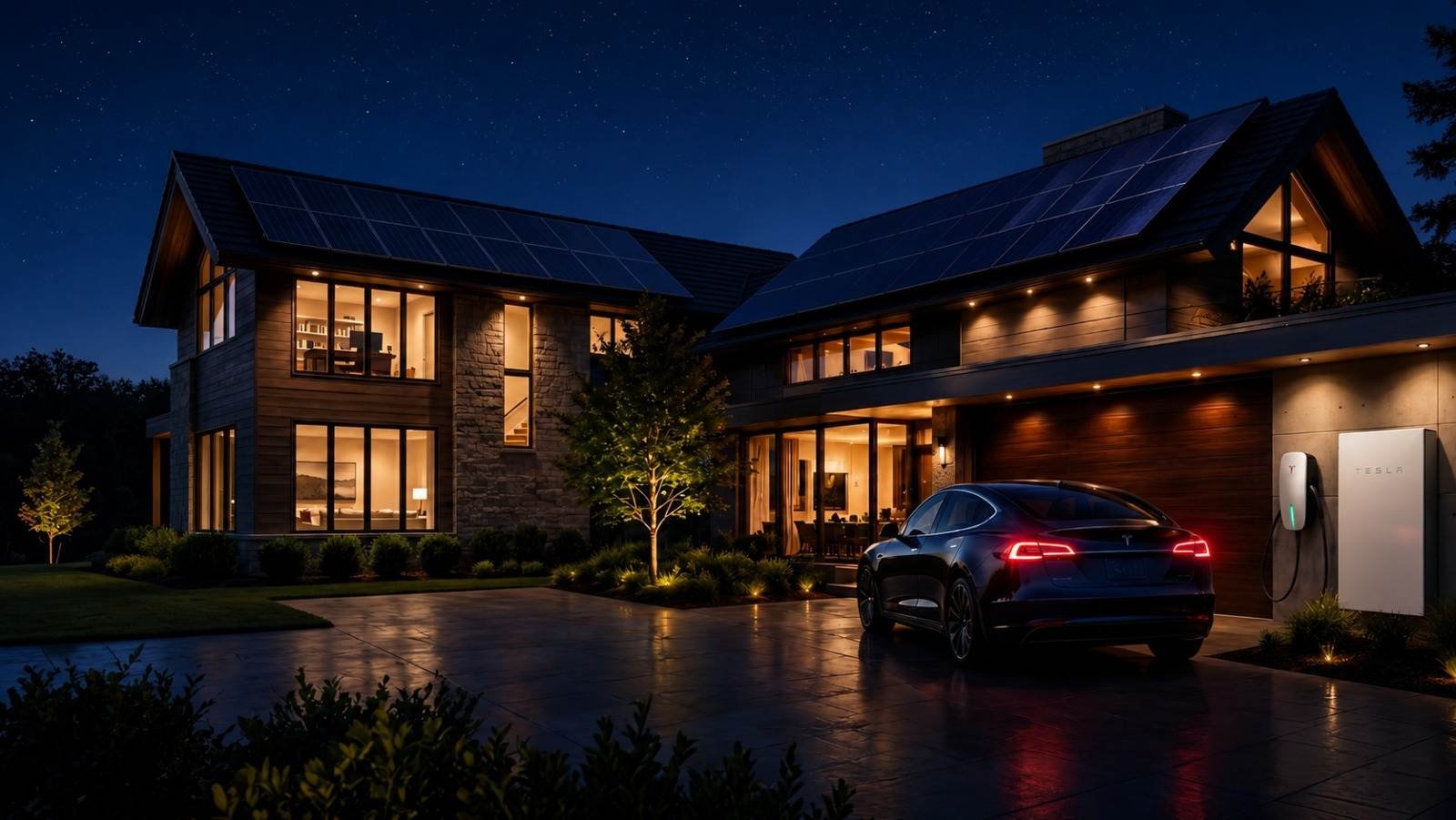
As utilities cut export compensation, storing your surplus beats selling it in more and more states. A Powerwall 3 with its built-in solar inverter makes the combined system simpler and cheaper than bolting the parts together, and a single install keeps permitting, interconnection, and any state rebate filing in one package.
Stress-testing your result
Good solar decisions survive pessimistic inputs. Rerun the numbers with your rate 20% lower (utility discounts happen), production 15% under (weather varies), and the payback stretched accordingly. If the project still clears your threshold, most do in decent sun with current incentives, you're deciding on robust ground rather than a sunny-day brochure.
Then test the optimistic direction that actually matters: rates in most territories have climbed steadily for a decade, and every increase accelerates payback on a system whose costs froze at installation. Solar's quiet superpower is that it's a fixed-rate contract with your own roof.
Roof reality: what changes the modeled number
South-facing unshaded roof at moderate pitch: the model holds. East-west split: expect ~10-15% less annual production but often better alignment with morning and evening usage, sometimes worth more per kWh under time-of-use rates. Shading from trees or neighbors: the variable that demands on-site measurement, since even partial shade patterns move production meaningfully.
Roof age belongs in the plan too: panels outlive shingles, and re-roofing under an array costs real money. If your roof has under ten years left, sequence the roofing first, a coordination we handle routinely.
The production curve vs your consumption curve
Solar's economics live in the overlap between when panels produce (midday peak) and when your home consumes (morning and evening shoulders). Full net metering made the mismatch free; reduced-export tariffs price it, and batteries, load scheduling, or east-west panel splits close it.
Practical translations: run the dishwasher and laundry at noon, schedule EV charging into the production window on work-from-home days, and let a battery time-shift the rest. Households that align consumption with production capture 15–25% more value from identical hardware, behavior as a system component.
What 25-year equipment warranties actually promise
Panel warranties run two layers: product (materials and workmanship, typically 12–25 years) and performance (guaranteed output floor, commonly 84–92% at year 25). Inverters and batteries warrant shorter, 10–12 years, which is why quality quotes price the mid-life inverter replacement honestly rather than hiding it.
The bankability behind the paper matters as much as the terms: warranties from manufacturers likely to exist in year 20 are worth more than aggressive numbers from newcomers. It's a selection criterion we apply for you at design time. The warranty conversation also frames maintenance honestly: quality systems need almost none, occasional visual checks and keeping panels unshaded, which is exactly what 25-year paper assumes and what cheap installs quietly violate.
Frequently asked questions
Most homes offset 80–90% of their bill, for a $220/month bill, roughly $2,200/year. Your rate, roof, and utility rules set the exact figure, which a free assessment pins down.
It now turns on your electric rate, your roof, and whichever state or utility incentives you qualify for, since the 30% federal credit ended after 2025. High-rate states and sunny regions recover fastest, and the system then produces for 25+ warrantied years.
Yes, differently: pair a battery and consume your own production instead of exporting it. In reduced-export states, solar-plus-storage is now the configuration that pencils.
Panel efficiency improves incrementally, but waiting costs you each year's savings and risks further incentive changes, the federal credit has already expired and state programs run on finite budgets. Systems installed today are warrantied for 25 years of production; the waiting game rarely pencils.
It assumes a healthy offset typical of most territories. Reduced-export tariffs (like NEM 3.0) shift value toward battery pairing, which the assessment models specifically for your utility's rules.
Studies consistently show owned systems adding resale value, commonly around 4%, with faster sales in solar-familiar markets. Leased systems complicate rather than add; ownership (cash or loan) is what appraisers credit. Keep the production records; they're the proof buyers' agents ask for, a year of actual generation data answers valuation questions no brochure can, and the monitoring app exports it in minutes.