


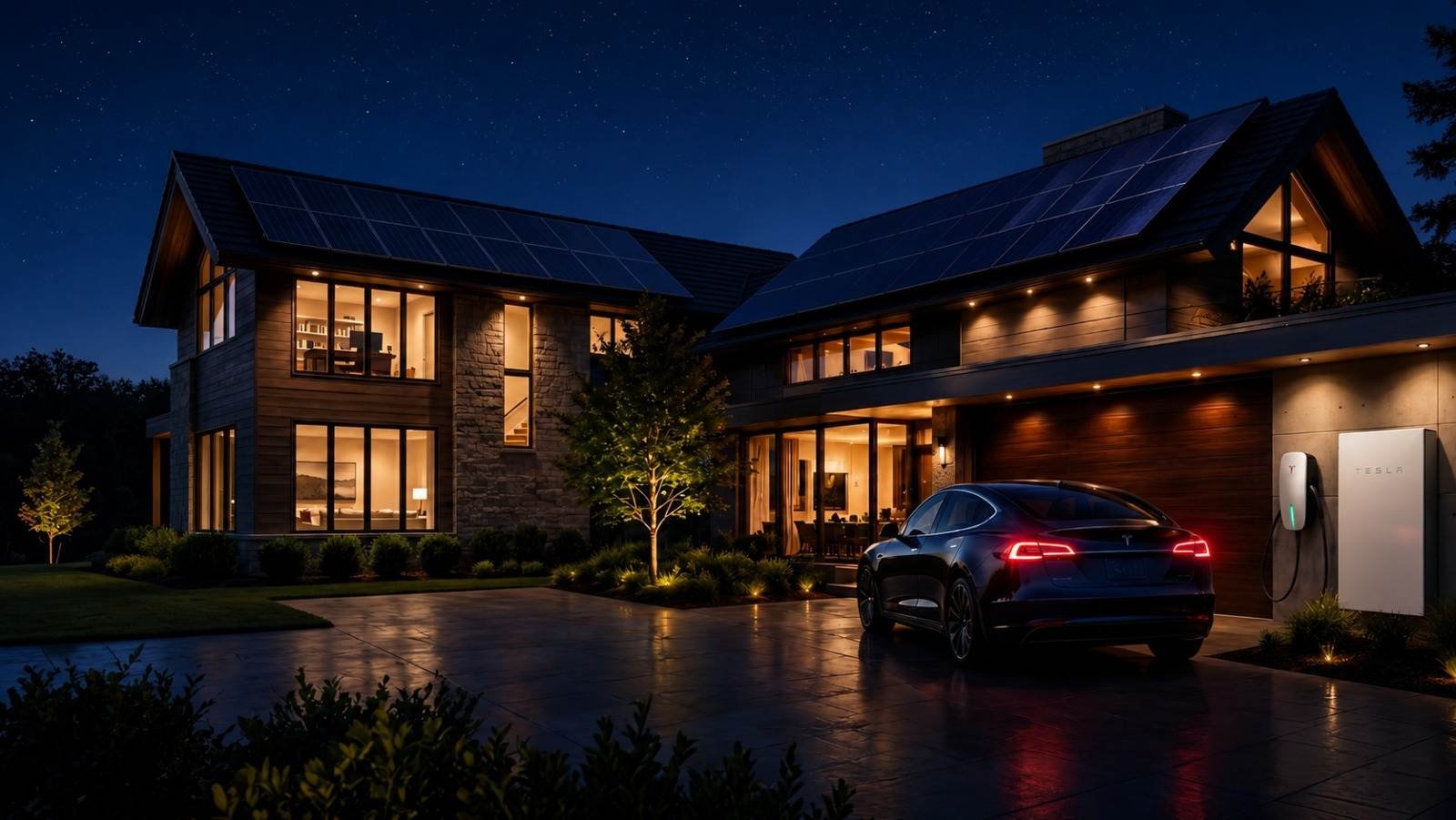
Level 2 EV Charger Installation
Quick answer
Level 2 (240V) EV charger installation costs $400–$1,500 installed and adds 25–44 miles of range per hour, 5–10x faster than a wall outlet. Licensed, Tesla-certified electricians, permit included.Typical installed cost: $400–$1,500
Level 2 is the home-charging standard: a dedicated 240-volt circuit that refills nearly any EV overnight. We size the circuit to your vehicle and panel, install any brand of charger, and handle permit and inspection.
About Level 2 EV Charger Installation
Level 2 charging is what makes owning an EV effortless: plug in when you get home, wake up to a full battery. The difference from a standard outlet is dramatic, 25–44 miles of range per hour instead of 3–5, and it comes from a dedicated 240-volt circuit that our licensed electricians install to code.
We install every major brand, Tesla Wall Connector, ChargePoint, Emporia, Grizzl-E, JuiceBox, or the charger you already bought. The install includes the load calculation, the correctly sized circuit and breaker, mounting and commissioning, and the permit and inspection.
What determines your installation cost
- Distance from your electrical panel to the charging spot
- Open garage walls (cheaper) vs finished walls (more labor)
- Charger amperage, 48A charging needs a 60A circuit and thicker wire
- Whether your panel has spare capacity or needs an upgrade
- Local permit fees
Hardwired or plug-in
A hardwired charger connects directly to the circuit and supports the fastest home charging (48A). A plug-in charger uses a NEMA 14-50 outlet, tops out at 40A, and is easy to swap or take when you move. Both are code-compliant when installed correctly, we'll recommend the right fit for your charger, panel, and plans.
| Hardwired | Plug-in (NEMA 14-50) | |
|---|---|---|
| Max charge rate | Up to 48A (~44 mi/hr) | Up to 40A (~30 mi/hr) |
| Circuit | 60A | 50A |
| Portable when you move | No (fixed) | Charger yes, outlet stays |
| Outdoor use | Best, no exposed plug | Needs a proper outdoor-rated outlet |
| Best for | Fastest, cleanest permanent install | Flexibility and lower hardware cost |
How it works
Free assessment
A licensed electrician evaluates your panel, capacity, and site at no cost.
Transparent quote
You get a clear, written, fixed price, no surprises, no pressure.
Professional install
Tesla-certified electricians complete the work to code, permit pulled.
Inspection & warranty
We schedule inspection and back the work with our workmanship guarantee.
What's included
- Licensed, insured & Tesla-certified electrician
- Free in-home assessment and load calculation
- Permit pulled and inspection scheduled
- All materials and code-compliant wiring
- Clean, professional install with cleanup
- Workmanship guarantee of up to 10 years
Get a free level 2 ev charger installation estimate
Book your free in-home estimate
Pick a time that works for you and we will match you with a licensed, Tesla-certified electrician in your area. No obligation, transparent fixed pricing.
Book Your Free In-Home Consultation →Frequently asked questions
A 240-volt charger that delivers 25–44 miles of range per hour, versus 3–5 for a standard (Level 1) wall outlet. It's the standard for home EV charging.
Not always. Many homes have spare capacity; a load calculation during your free assessment confirms it before any work.
Hardwired supports higher amperage (up to 48A) and is required for some chargers; a plug-in unit on a NEMA 14-50 outlet is easier to swap. We'll recommend based on your charger and panel.
Most installs are done in 2–4 hours. A long wire run, finished-wall routing, or a detached garage adds time.
For Tesla owners the Wall Connector is the best value; for other EVs we like chargers with strong apps and UL listing. See our best home EV chargers guide, or ask during your free assessment.
Related guides
Level 1 vs Level 2 EV Charging: Which Do You Need?
The real-world difference between Level 1 and Level 2 home charging speeds and costs.
Learn more →The Best Home EV Chargers in 2026
Our pick of the best Level 2 home EV chargers compared on speed, features, and value.
Learn more →How Much Does EV Charger Installation Cost in 2026?
A full breakdown of Level 2 home EV charger installation costs, what drives the price, and how to save.
Learn more →More ev chargers services
EV Charger Installation
Professional Level 2 EV charger installation typically costs $400–$1,500 installed and takes 2–4 hours. Charge Home Solutions is a Tesla-certified network of 4,000+ licensed electricians offering free in-home estimates nationwide.
Learn more →Tesla Wall Connector Installation
Tesla Wall Connector installation runs $400–$1,200 installed. As a Tesla-certified installer, Charge Home Solutions wires the 48-amp connector for up to 44 miles of range per hour and registers your warranty.
Learn more →Tesla Universal Wall Connector Installation
The Tesla Universal Wall Connector charges both Tesla and J1772 EVs at up to 48 amps. Installed cost is typically $500–$1,300 with a Tesla-certified electrician.
Learn more →Commercial EV Charging
Commercial EV charging stations for workplaces, multifamily, retail, and fleets. Charge Home Solutions handles site assessment, load management, networking, and rebate paperwork.
Learn more →