


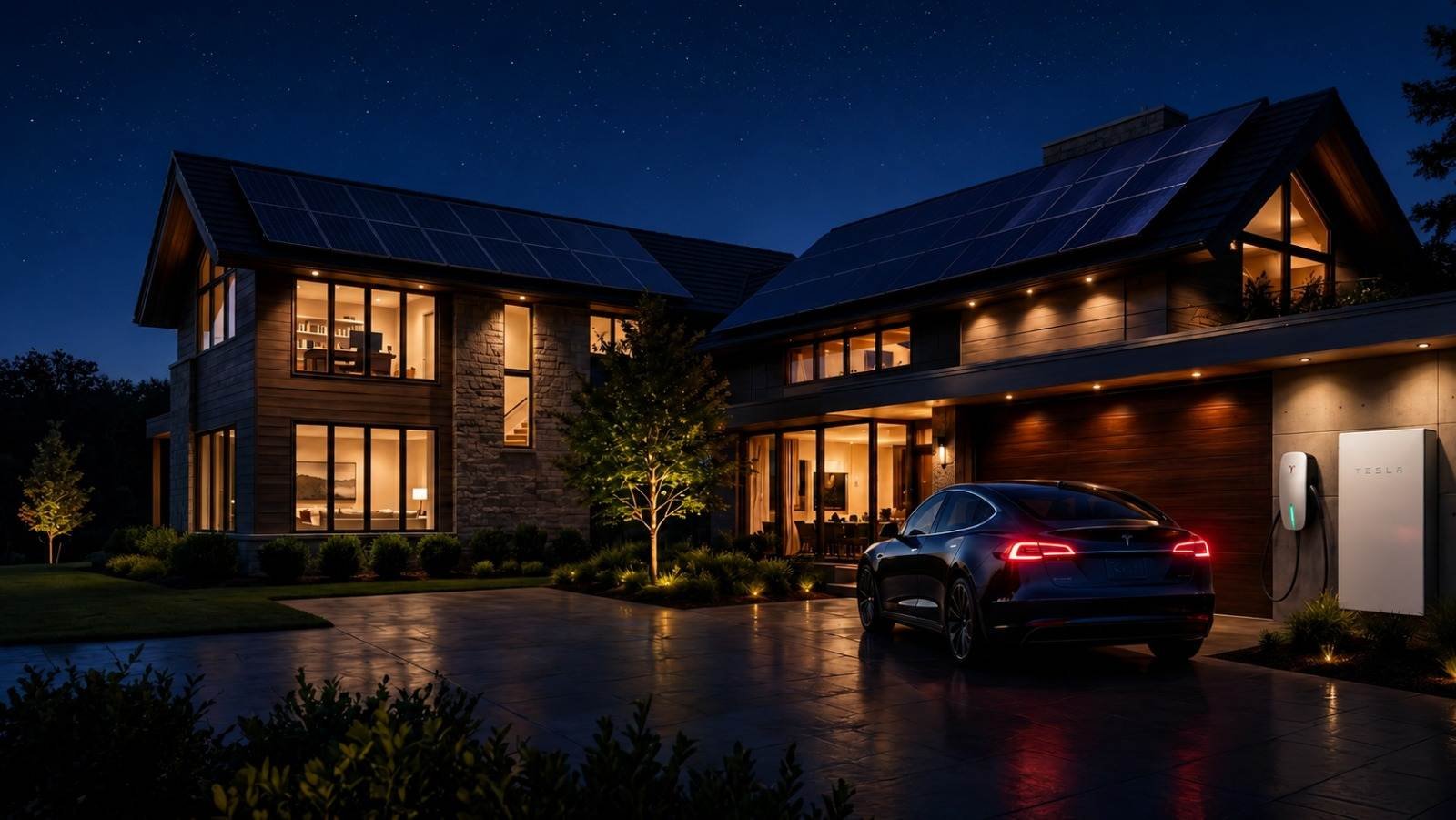
EV Charger Installer in Tampa, FL: Licensed, Insured and Tesla-Certified
Who installs EV chargers near me in Tampa?
A home EV charger is a dedicated, high-amperage circuit, not a plug-in appliance. In practice that means the person installing it should be a licensed electrician who can evaluate your panel, run the wiring, mount the unit, and take responsibility for the permit and inspection.
Charge Home Solutions is a nationwide network of Tesla-certified, licensed and insured electricians. For Tampa homeowners, the process starts with a request for a free in-home estimate. We match you with a qualified installer for your address and the equipment you have chosen, whether that is a Tesla Wall Connector, Universal Wall Connector, or another Level 2 charger.
Tampa Electric's own EV guidance points in the same direction: use a licensed electrician, have the existing service assessed at home, and get a permit from the city or county.
Why a licensed, Tesla-certified installer matters locally
Three practical reasons come up again and again for homeowners:
For the full step-by-step process on Tesla equipment, see our Tesla installation hub at chargehomesolutions.com/tesla-installation-hub/.
- Licensing protects you. Florida generally requires electrical work like this to be done by licensed professionals. A licensed electrician can legally pull permits and stand behind the work. An unlicensed handyman usually cannot, and unpermitted work can complicate insurance claims and home sales.
- Insurance matters. The work happens inside your garage or on an exterior wall, connected to your main panel. Insured installers give you a layer of protection if something goes wrong.
- Tesla certification helps with the equipment. Tesla chargers and Powerwall systems have specific commissioning and configuration steps. A Tesla-certified installer is familiar with them, which helps avoid return trips and setup surprises.
The Tampa permit and inspection flow
Exact requirements depend on whether your home sits inside the City of Tampa or in unincorporated Hillsborough County or another nearby municipality, so the permitting office can differ. The overall flow is similar:
1. Site assessment. The electrician looks at your panel, available capacity, the distance from the panel to the charger location, and the mounting spot. 2. Scope and quote. You receive a written scope that covers the circuit, wiring, breaker, charger mounting and any panel work. 3. Permit application. The licensed electrician's company applies to the city or county building department. You should not have to figure out the paperwork yourself. 4. Installation. The circuit is run, the charger is mounted and connected, and the unit is tested. 5. Inspection. A local inspector reviews the work. Once it passes, the permit is closed out. 6. Commissioning. For Tesla products, the charger is set up and verified so it is ready to use.
Because permit queues and inspector schedules vary, we do not promise a fixed timeline. Many installs move quickly once the estimate is approved, but the permit and inspection steps are the part that depends on the local office.
What affects EV charger installation cost in Tampa
We do not publish a one-size price because the biggest cost drivers are specific to each house. Here is what typically moves the number:
This is why a free in-home estimate is more reliable than an online price guess. You get a scope tied to your actual panel and layout.
- Panel capacity. If your panel has room for a new dedicated circuit, the job is simpler. If it is full or near its limit, a load evaluation may point to a panel change or other solution.
- Wiring distance. The run from the panel to the charger location affects materials and labor. A garage right next to the panel is different from a detached garage or a far exterior wall.
- Install location. Indoor garage, exterior wall, or a carport each call for different mounting and conduit approaches.
- Charger choice. Hardwired and plug-in options, and different amperage settings, change the circuit requirements.
- Permit and inspection fees. These are set by the local jurisdiction.
- Utility involvement. If a service upgrade is required, that adds coordination and possibly additional work.
Incentives and rebates in Florida
The federal 30C EV-charger tax credit has expired, so do not plan your budget around a federal credit. Florida and local utility programs can change, and availability, eligibility and funding vary over time. Check with your utility and state resources for anything current before you buy, and keep your installation paperwork in case a program asks for it. We will not promise a rebate that we cannot verify.
Tampa climate and seasonal considerations
Tampa's heat, humidity, summer thunderstorms and hurricane season affect how a charger should be planned:
Installing before peak storm season gives you more scheduling flexibility, though we can schedule year round.
- Heat and humidity. Garages get hot in summer, so equipment placement and ventilation are worth discussing during the estimate.
- Rain and storms. Outdoor installations need weather-rated equipment and proper conduit and sealing, which a licensed electrician selects.
- Flood-prone areas. Many Tampa-area properties sit in low-lying or flood-zone locations, so the installer should consider where the charger and wiring are mounted.
- Outages. If storm outages are a concern, some homeowners pair a charger with a Powerwall. That is a separate project and should be assessed on its own.
What to ask any EV charger installer before you hire
A good installer answers these plainly. At Charge Home Solutions, the in-home estimate is free and written up so there are no surprises.
- Are you a licensed electrician, and can I see proof of license and insurance?
- Will you assess my panel in person before quoting?
- Who pulls the permit, and does the quote include inspection?
- What happens if my service needs an upgrade?
- Is the quote itemized so I can see what is included?
Book your free in-home estimate
Ready to move forward? Charge Home Solutions matches you with a licensed, insured, Tesla-certified electrician in your area, with a free in-home estimate and no obligation.
Request your free estimate at chargehomesolutions.com/request-service or call 888-995-6044.
Frequently asked questions
Not always. It depends on your panel's capacity, what else it powers, and the amperage you want the charger to use. A licensed electrician performs a load evaluation during the in-home assessment and tells you whether the existing panel can handle a new dedicated circuit or whether an upgrade is needed. Sometimes adjusting the charger's amperage setting is an option, and the electrician can explain the tradeoffs.
Tampa Electric's EV guidance says to get a permit from the city or county, and a hardwired charger circuit is typically permitted work. When you hire a licensed electrician through Charge Home Solutions, the installer's company handles the permit application with the correct local office for your address, and the work is inspected before it is closed out.
Yes, you should hire a licensed electrician. Tampa Electric recommends it, and licensed electricians are the ones who can pull permits and have the work inspected. Charge Home Solutions works with licensed, insured, Tesla-certified electricians. Ask any installer for license and insurance details before you sign.
The electrician checks your main panel and available capacity, looks at the proposed charger location, estimates the wiring route and distance, and discusses charger options and amperage. You then receive a written scope and quote. The estimate from Charge Home Solutions is free.
If the assessment shows your service needs an upgrade, Tampa Electric's guidance is that the electrician coordinates with the utility. Your installer identifies the need, explains the scope, and handles that communication so you are not left chasing it. Utility timelines are set by the utility, so they can affect the schedule.
It varies. The physical installation is often a short job when the panel has capacity and the wiring run is simple. The overall timeline also depends on permit processing, inspector availability and any utility work. Your installer can give a realistic estimate after seeing your home.
Yes. We serve Tampa and nearby communities in the Tampa Bay area. Request an estimate with your address and we will confirm coverage and match you with an installer.
Related guides
Electric Panel Capacity Explained: Amps, Watts, and Headroom
Your electric panel's capacity is the maximum current it can safely deliver to your home, measured in amps and set by the main breaker (commonly 100, 150, or 200 amps). Multiply amps by voltage and yo
Read article →Can You Install an EV Charger on a 60-Amp Service?
Sometimes, yes. A 60-amp electrical service can support an EV charger in some homes, but usually only a lower-amperage one, and only if a licensed electrician's load calculation shows there is enough
Read article →What Is Amp Derating and How Does It Affect EV Charger Wiring?
Amp derating means reducing the current a wire, breaker, or charger is allowed to carry below its maximum nameplate rating, so that heat and real-world conditions do not push it past safe limits. For
Read article →Sharing One Circuit Between a Wall Connector and a Subpanel: What Works and What Doesn't
In most homes, a Wall Connector should not share a single branch circuit with a subpanel or any other load. EV charging equipment is generally required to have its own individual branch circuit, and a
Read article →What to Do With Old Panels: Fuse Boxes, Federal Pacific, and Zinsco
If your home has an old fuse box, a Federal Pacific (FPE) Stab-Lok panel, or a Zinsco panel, the usual answer is to have a licensed electrician inspect it and, in most cases, replace it with a modern
Read article →How to Protect Your Wall Connector From Garage Dust, Heat, and Damp
The best way to protect a Wall Connector in a garage is to get three things right: where it is mounted, how the wiring and conduit are sealed, and how the space is kept clean and ventilated. A charger
Read article →