


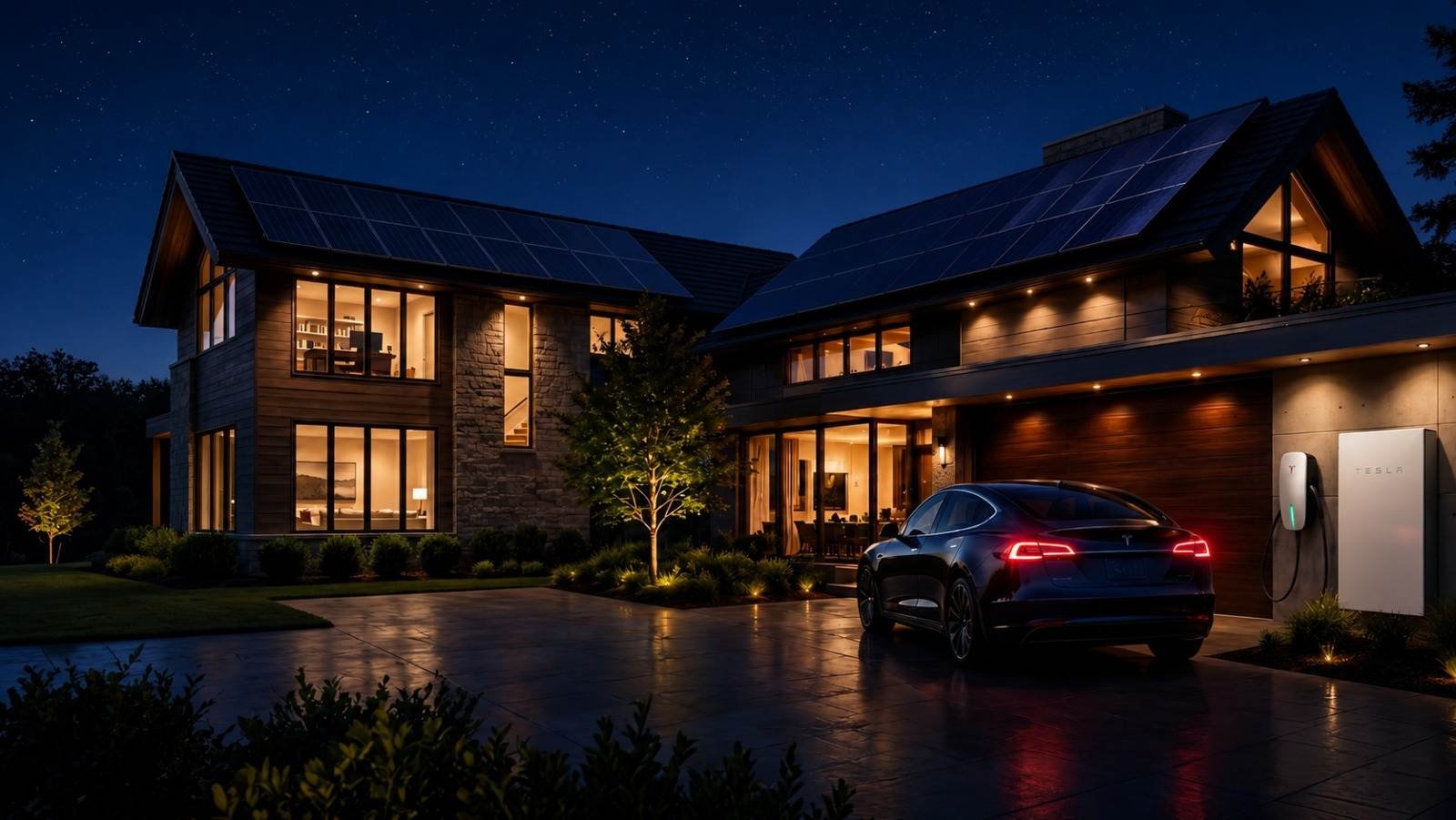
Tesla Wall Connector vs Universal EV Chargers
Once you've decided to install a Level 2 home charger, the next question is which one to buy. The Tesla Wall Connector is one of the most popular options, but it's far from the only good choice. Universal brands like ChargePoint, Wallbox, Emporia, and Grizzl-E are all solid. The right pick depends mostly on what car you drive and which features matter to you. Here's how they compare in plain terms.
Connectors: NACS vs. J1772
The most important difference is the plug on the end of the cable. There are two common standards for home charging in North America:
The good news is that adapters bridge the gap. Tesla vehicles include a J1772 adapter, so a Tesla can use almost any universal charger. And a NACS car can often use a J1772 charger with an adapter, or vice versa. So the connector matters, but it rarely locks you out of a charger entirely.
- NACS (North American Charging Standard) is the connector Tesla uses. The Tesla Wall Connector has this plug built in. NACS is now being adopted by many other automakers, so newer non-Tesla EVs are increasingly coming with NACS ports too.
- J1772 is the long-standing connector used by most non-Tesla EVs sold in recent years. Most universal chargers use a J1772 plug.
The Tesla Wall Connector
The Tesla Wall Connector is a sleek, well-built Level 2 charger designed to pair seamlessly with Tesla vehicles. Its strengths:
It works with non-Tesla EVs too if their port matches or with the right adapter, but it's at its best in a Tesla household. If everyone in your home drives a Tesla, it's a natural fit.
- Built-in NACS plug that connects directly to any Tesla with no adapter.
- Clean design that many owners like the look of in a garage.
- Wi-Fi connectivity and integration with the Tesla app for tracking charging.
- Power sharing across multiple units, useful if you have two Teslas.
Universal chargers: ChargePoint, Wallbox, Emporia, Grizzl-E
Universal Level 2 chargers are built to work with essentially any EV. Each brand has its own personality:
Because these use J1772, they work with the widest range of vehicles today, including Teslas via the included adapter. If your household has a mix of car brands, a universal charger is often the more flexible choice.
- ChargePoint is known for a polished app and access to a large public charging network through the same account.
- Wallbox offers compact designs and models with advanced features like load balancing and, on some units, the ability to send power back to your home.
- Emporia is popular as a value option with energy-monitoring features, often at a lower price.
- Grizzl-E is a rugged, no-frills charger built to be durable and simple, favored by people who want reliability over apps.
Features worth comparing
Beyond the plug, chargers differ in ways that may matter to you:
- Amperage and power. Higher-amp chargers (up to 48 amps) charge faster, but only if your car and your circuit support it. Match the charger to your vehicle's maximum and your panel's capacity.
- Smart features. Wi-Fi, apps, scheduling, and energy monitoring help you charge during cheaper off-peak hours. Some people love these; others want a plain charger.
- Cable length. A longer cable gives you flexibility in where you park. Check that it reaches comfortably.
- Indoor vs. outdoor rating. If your charger will be exposed to weather, make sure it's rated for outdoor use.
- Hardwired vs. plug-in. Some chargers hardwire to your electrical system; others plug into a 240-volt outlet. Both are fine when installed correctly.
How to choose
Here's a simple way to narrow it down:
Prices for the charger unit vary by brand and features. Whatever you choose, the installation itself typically runs $400 to $1,800 before your final quote, driven mostly by the distance from your panel and your panel's spare capacity.
- All-Tesla household? The Tesla Wall Connector is a clean, reliable match.
- Mixed brands, or a non-Tesla EV? A universal J1772 charger keeps your options open, and still works with a Tesla via adapter.
- Want the lowest cost? Emporia and Grizzl-E are often more budget-friendly.
- Want deep app features or public-network access? ChargePoint or Wallbox may appeal.
- Buying a new EV soon? Check whether it has a NACS or J1772 port, since that affects which plug is most convenient.
A note on incentives
The federal 30C tax credit for home EV chargers ended June 30, 2026, so a charger bought and installed now does not qualify for it. Some utilities still offer rebates for Level 2 chargers or discounted overnight charging rates. These vary by location and change often, so confirm current programs for your address and utility, and consult a tax professional about your situation.
The bottom line
The Tesla Wall Connector is excellent for Tesla owners, while universal chargers from ChargePoint, Wallbox, Emporia, and Grizzl-E offer broad compatibility and a range of features and prices. Let your car's connector and the features you actually want guide the decision, and match the charger's power to your car and panel. Charge Home Solutions is Tesla Energy Certified and installs all major brands nationwide through licensed local electricians, permits and inspection included. For help choosing and a free install quote, call 888-995-6044.
Frequently asked questions
Often yes, but it depends on the port. If your EV has a NACS port, it connects directly. If it has a J1772 port, you'd need an adapter, which isn't always included. For a mixed-brand household, a universal J1772 charger is usually the simpler choice.
Yes. Tesla vehicles come with a J1772 adapter, so they work with universal chargers from ChargePoint, Wallbox, Emporia, Grizzl-E, and others. Just plug the charger's J1772 connector into the adapter, then into your Tesla. Charging speed depends on the charger and your car.
Not necessarily. Charging speed depends on the charger's amperage, your car's maximum accepted rate, and your circuit capacity, not the brand. A 48-amp universal charger and a Tesla Wall Connector can deliver similar speeds. Match the charger's power to your vehicle and panel for the best result.
Related guides
Why You Should Never Use an Extension Cord to Charge an EV
Extension cords are not built for the long, sustained electrical load that EV charging creates. A car can pull close to its maximum current for hours, and that heat can build up in the cord, the plug
Read article →Is It Safe to Charge an EV Overnight in Your Garage?
Yes, charging an EV overnight in your garage is generally safe when you use certified charging equipment, a properly sized dedicated circuit, and wiring that is in good condition. Millions of drivers
Read article →How to Use Time-of-Use Rates to Charge Your EV Off-Peak
To use time-of-use (TOU) rates for EV charging, you confirm your utility's off-peak hours, enroll in a TOU or EV-specific rate plan, and then schedule your car or home charger to draw power only durin
Read article →Getting Your Home EV-Ready: A Complete Homeowner Checklist
To get your home EV-ready, you need to check five things: your electrical panel capacity, where the car will park, the wiring route between the two, the charger you plan to use, and local permit requi
Read article →Trenching and Conduit: Running Power to a Driveway or Detached Garage
To run power to a driveway or detached garage, a licensed electrician typically digs a trench from your main or sub panel to the new location, lays conduit and conductors in it, then connects everythi
Read article →How to Prepare Your Home for Electrification: EV, Heat Pump, and Induction
To prepare your home for electrification, start with your electrical service and panel, not the appliances. An EV charger, a heat pump, and an induction range each need substantial 240-volt power, and
Read article →