


The Best Home EV Chargers in 2026 (What to Look For)
Shopping for a home EV charger in 2026 means wading through dozens of brands, all claiming to be "the fastest" or "the smartest." The truth is that there is no single best charger for everyone. The right unit depends on your vehicle, your electrical panel, where the charger will live, and how you like to manage things. This guide gives you a buyer's framework so you can judge any charger on its merits instead of trusting a marketing headline.
What actually makes a home charger "good"
Nearly every home charger sold today is a Level 2 unit, meaning it runs on a 240-volt circuit. Within that category, a handful of specifications separate a great charger from a mediocre one. Focus on these before you look at the badge on the front.
Amperage and power output
Amperage determines how quickly your car can charge. Common home units are rated at 32, 40, or 48 amps, which roughly translates to 7.7 kW, 9.6 kW, and 11.5 kW respectively. A higher-amperage charger only helps if two other things can keep up: your car's onboard charger and your home's electrical circuit. A 48-amp charger requires a 60-amp circuit and hardwiring under most electrical codes, so it is not always the practical choice. For many households, a 40-amp unit hits the sweet spot of speed and simplicity.
Connector type: NACS vs. J1772
2026 is a transition year for connectors. Most non-Tesla EVs sold in the U.S. still use the J1772 plug for Level 2 charging, while Tesla and a growing number of new models use the NACS connector. Some chargers ship with one or the other, and adapters exist to bridge the gap. Before buying, confirm which plug your car accepts and whether you want a charger that natively matches it or one you will adapt. A mismatch is not dangerous, but it is an extra dongle to keep track of.
UL listing and safety certification
This one is non-negotiable. A quality charger carries a UL listing (or an equivalent certification from a recognized testing lab). This tells you the unit has been independently tested for electrical safety and fire resistance. Uncertified chargers sold through overseas marketplaces may be cheaper, but they can fail inspection, void your homeowner's insurance in a fire claim, and put your family at risk. Never cut this corner.
Indoor vs. outdoor rating
If your charger will live in a garage that stays dry, most units are fine. If it will be mounted outside, exposed to rain, snow, or direct sun, look for a NEMA 4 enclosure rating and a wide operating-temperature range. Cable flexibility in cold weather matters too, some cheaper cables stiffen badly below freezing.
Cable length
Cable length is one of the most underrated specs. A 24-foot cable gives you flexibility to reach your car's charge port no matter how you park or which side the port is on. A short cable can force you to always back in or park a specific way. Longer is almost always better, as long as you have a place to hang the excess.
Smart features and load management
Smart chargers connect to Wi-Fi and let you schedule charging, track energy use, and take advantage of time-of-use electricity rates that are cheaper overnight. The most valuable smart feature for many homes is dynamic load management. This lets a charger automatically dial its power up or down based on how much capacity your panel has to spare. For a home with a smaller or fully loaded electrical panel, load management can make a Level 2 install possible without an expensive panel upgrade.
Warranty
A charger is a long-term appliance mounted to your wall. Look for at least a three-year warranty; the better manufacturers offer more. A strong warranty also signals that the company expects to still be around to honor it.
The main brand categories
Rather than ranking brands, it helps to understand the categories they fall into. Each has strengths, and the right pick depends on your situation.
Vehicle-matched chargers
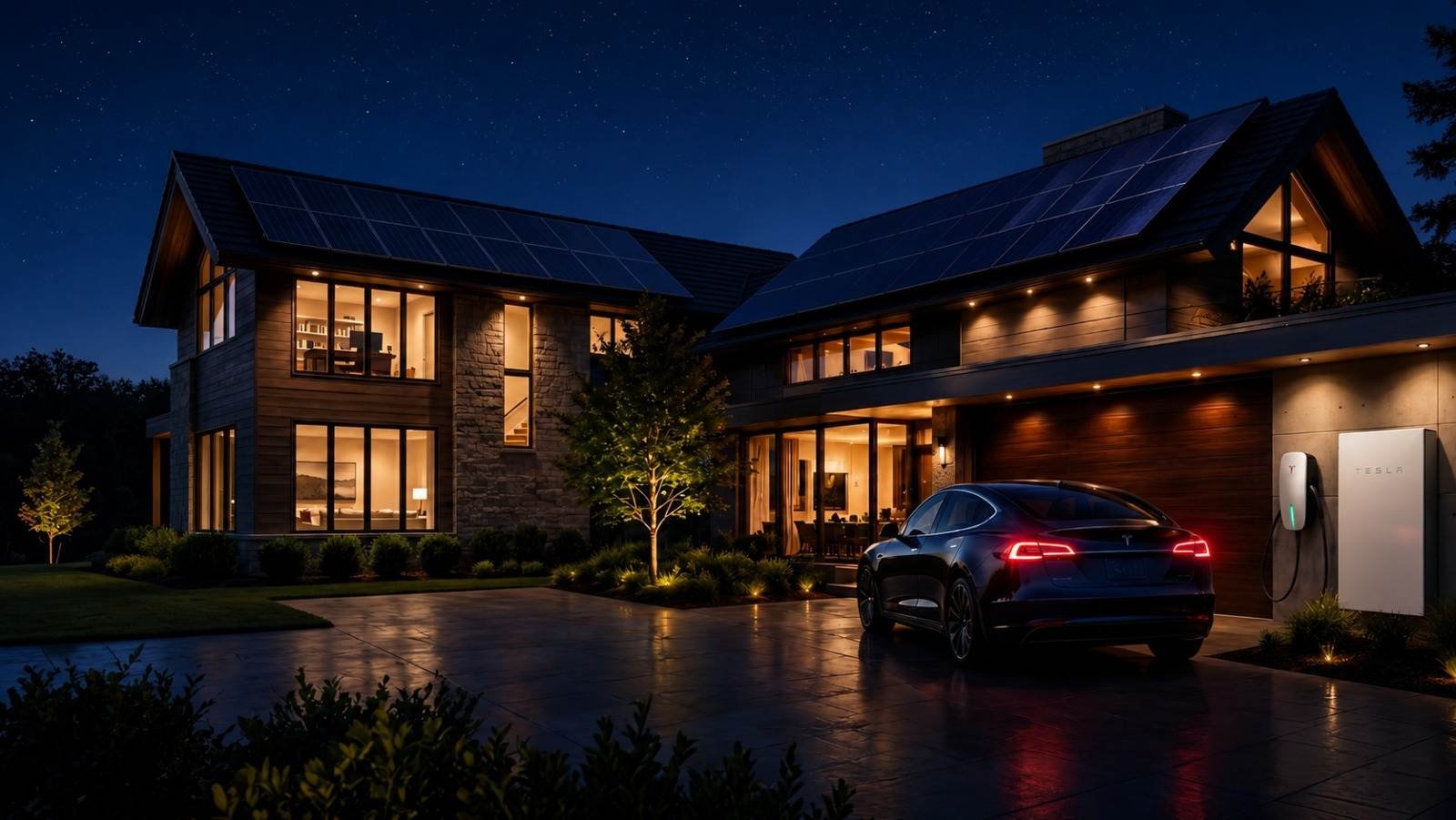
The Tesla Wall Connector is the best-known example. If you drive a Tesla or a NACS-equipped vehicle, a manufacturer-matched charger offers tight integration, a clean look, and a native connector. These units are well-built and reasonably priced, though their app ecosystem is designed around a specific brand of car.
Universal Level 2 chargers
Brands such as ChargePoint, Wallbox, Emporia, and Grizzl-E make chargers designed to work with any EV. This is the largest category and where most shoppers land. Within it you will find differences in build quality, app polish, and features. Some emphasize rugged outdoor durability, others focus on smart-home integration and energy tracking, and a few prioritize load management for panel-constrained homes. Read the spec sheet and match it to your priorities rather than assuming the most expensive one wins.
Budget and no-frills units
There are simple, reliable chargers without Wi-Fi or apps. If you just want to plug in overnight and do not care about scheduling or energy dashboards, a straightforward UL-listed unit can serve you well for less money. Just confirm the amperage and cable length still fit your needs.
How to match a charger to your car and panel
Start with your car. Find its maximum onboard AC charging rate, usually listed in kilowatts. If your vehicle tops out at 7.7 kW, a 48-amp charger will never charge it faster than a 40-amp one, so you can save money and complexity by right-sizing. Then look at your electrical panel. An older 100-amp panel with a full breaker box may not have room for a high-amperage circuit without load management or an upgrade. A licensed electrician performs a load calculation to determine exactly what your home can support.
This is where professional guidance pays off. At Charge Home Solutions, our Tesla Energy Certified and SPAN Certified electricians look at your specific vehicle, panel, and garage layout, then recommend a charger and circuit that fit, no upselling to power you can't use. We handle the permit, install, and inspection so the finished job is safe and code-compliant. Most home charger installations run between $400 and $1,800 depending on your panel and wiring distance, and we give you a clear number before any work begins. Call us at 888-995-6044 to talk it through.
The bottom line
The best home EV charger in 2026 is the one that fits your car's charging limit, matches your panel's capacity, carries a UL listing, and has a cable long enough to reach your port. Get those fundamentals right and the brand becomes a matter of preference and budget rather than a make-or-break decision.
Frequently asked questions
Only if your car can accept that much power and your panel can support a 60-amp circuit. Many EVs cap their onboard charging at a rate a 40-amp charger fully satisfies, so a 48-amp unit would charge no faster. Check your vehicle's maximum AC charging rate first.
Yes, with an adapter. The two connectors carry the same AC power; the difference is physical shape. Many drivers use adapters daily without issue. If you'd rather avoid the extra piece, buy a charger with the connector that natively matches your car.
For most homes, yes, mainly to schedule charging during cheaper overnight time-of-use rates and, on constrained panels, to use load management. If your electricity rate is flat and your panel has plenty of room, a simpler non-connected unit works fine.
Choosing the charger and its location is fine to do yourself, but the 240-volt circuit should be installed by a licensed electrician. It requires a permit, a load calculation, and an inspection, and a DIY mistake can create a fire risk or void your insurance. A professional install protects you.
Related guides
Level 1 vs Level 2 EV Charging: Which Do You Need?
The real-world difference between Level 1 and Level 2 home charging speeds and costs.
Read article →The Best Home EV Chargers in 2026
Our pick of the best Level 2 home EV chargers compared on speed, features, and value.
Read article →EV Charger Installation Laws by State: What Homeowners Must Know
Permits, codes, right-to-charge laws, and HOA rules for installing a home EV charger, and how they vary by state.
Read article →NEMA 14-50 vs Hardwired EV Charger: Which Is Better?
Should you install a NEMA 14-50 outlet or hardwire your Level 2 EV charger? The real differences in charging speed, cost, safety, and code.
Read article →How Long Does EV Charger Installation Take?
Most home EV charger installs take 2 to 4 hours, but the full timeline from booking to a working charger depends on your panel and the permit. Here's what to expect.
Read article →Level 1 vs Level 2 EV Charging: Which Do You Actually Need?
Level 1 charging uses a standard 120-volt outlet and adds roughly 3 to 5 miles of range per hour. Level 2 uses a 240-volt circuit and adds about 20 to 40 miles per hour, many times faster. Most EV owners...
Read article →