


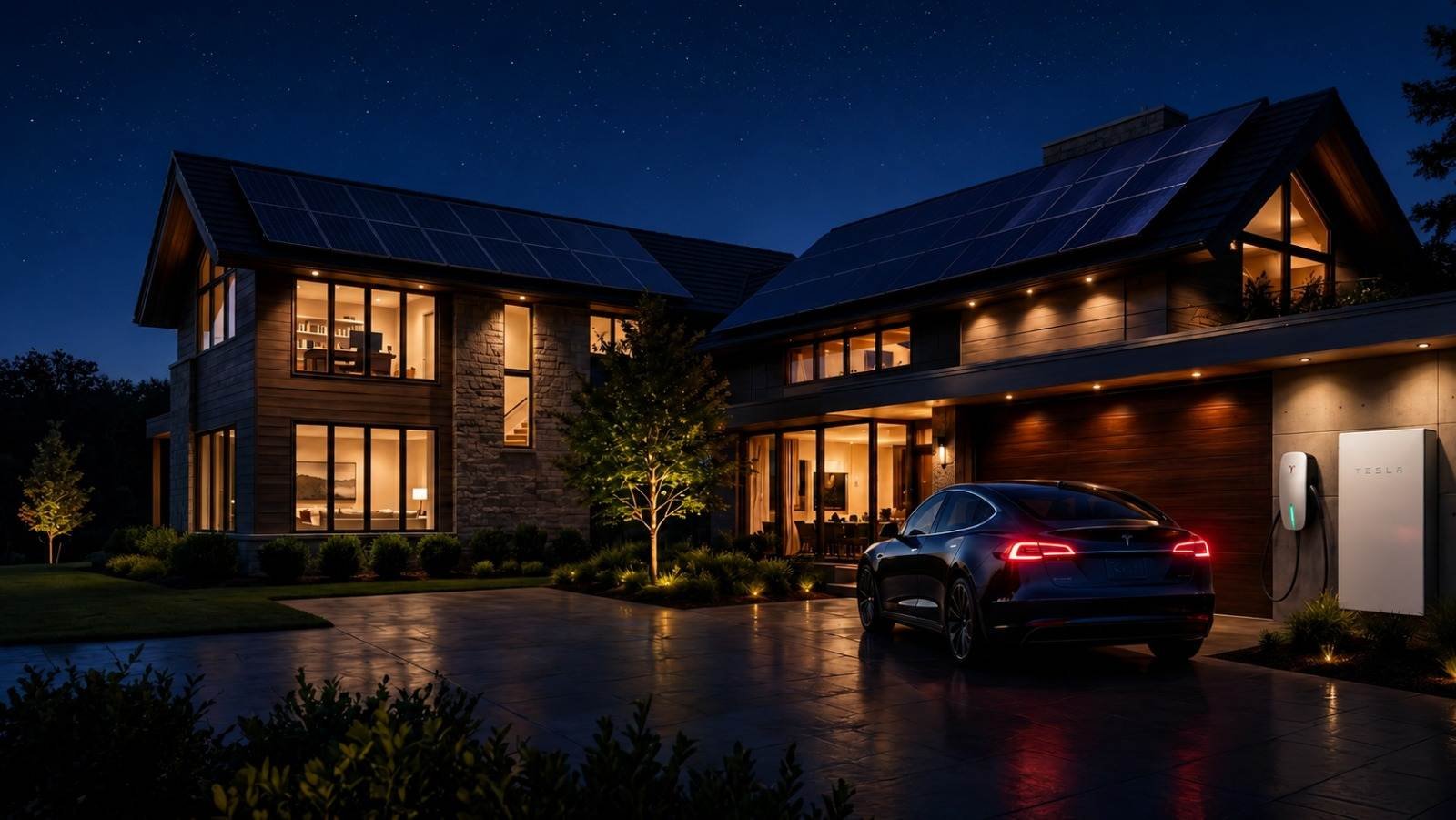
How to Prepare Your Colorado Springs Home and Garage for a Tesla and the EV Future
Why home charging readiness matters first
Most EV owners do the bulk of their charging at home, overnight, in the garage. A Tesla that plugs in each evening starts the next morning ready to go, and you skip most trips to public chargers. That convenience only works if your home can deliver power safely and reliably.
Tesla's general appeal comes from things like its software, its charging network, and a set of driver-assistance and safety features. Those are worth weighing when you choose a car. But the part you control at home is the electrical setup, and that is where a little planning pays off for years.
Step 1: Check your panel capacity
Your main electrical panel is the starting point. A Level 2 charger is a continuous, high-demand load, and many older Colorado Springs homes were built with 100-amp service or with panels that are already nearly full.
A licensed electrician typically looks at:
A load calculation then shows whether a new charging circuit fits as-is, whether a smart load-management device can help, or whether a panel or service upgrade is the cleaner long-term answer. That judgment belongs with a licensed electrician, not a guess from the outside of the panel.
- The size of your main service (for example 100, 150, or 200 amps)
- How many open breaker slots remain
- Your existing large loads, such as electric ranges, dryers, hot tubs, and electric heat
- The age and condition of the panel and any known brand-specific issues
- The distance between the panel and where the charger will mount
Step 2: Choose the right circuit and charger
For home use, there are two common paths.
The Wall Connector is a wall-mounted Level 2 charger on a dedicated circuit. The Tesla Universal Wall Connector is designed to work with Tesla vehicles and, with the appropriate adapter, other EVs. A higher-amperage circuit lets the charger deliver more power, which means faster charging. Your electrician matches the breaker, wire gauge, and charger settings to your panel and your driving habits.
Some owners start with a 240-volt outlet in the garage and use the portable charging cable. It can be a reasonable starting point, but a hardwired Wall Connector is generally the more robust long-term setup for daily use, and it keeps the cable tidy and off the garage floor.
If you are unsure which fits, ask how many miles you drive on a typical day and how many EVs you expect in the household. Most commuters in the Springs find that overnight Level 2 charging covers daily needs comfortably.
Step 3: Plan the garage layout
Small decisions now prevent awkward changes later.
- Charge port location: Mount the charger where the cable reaches the port without stretching, including when you park nose-in or back-in.
- Two-car garages: Consider conduit or a panel location that makes a second charger easy to add.
- Panel distance: Shorter wire runs generally mean less labor and material. Finished garage walls and ceilings can add work.
- Storage and clearances: Keep the area around the charger and panel clear and accessible.
- Detached garages: These can require trenching or a subpanel, which affects scope and cost.
Step 4: Think about Powerwall backup
Colorado Springs gets high winds, heavy snow events, summer thunderstorms, and hail, and outages can follow. A Tesla Powerwall is a home battery that can keep selected circuits running during an outage and can store power for use later. Pairing one with an EV charger is a common conversation, though how your system behaves during an outage depends on how it is designed and what loads it is set up to back up.
When an electrician sizes a Powerwall installation, they consider which loads you want to keep on, your panel layout, whether you have or plan to add solar, and where the battery can be mounted safely. Because you are already opening up electrical planning for the charger, it is a good time to decide whether a battery belongs in the picture now or later.
For the full step-by-step process, see our Tesla installation hub at chargehomesolutions.com/tesla-installation-hub/.
Permits and inspections in Colorado Springs
EV charger and battery installations are electrical work that generally requires a permit and inspection. In the Colorado Springs area, permitting is commonly handled through the Pikes Peak Regional Building Department, though the right jurisdiction depends on your address, so a local licensed electrician confirms it for your property.
The typical flow looks like this:
1. Site evaluation: The electrician reviews your panel, garage, and charging goals. 2. Scope and estimate: You receive a defined plan for the circuit, charger, and any panel work. 3. Permit: The licensed contractor pulls the electrical permit. 4. Installation: The circuit is run, the charger is mounted and configured. 5. Inspection: A local inspector reviews the work. 6. Final sign-off: After approval, the system is cleared for regular use.
HOA communities may also have their own rules about exterior work or equipment placement, so it helps to check before work begins. Utility notification can be part of the process for batteries and solar.
What affects cost in this area
We do not quote a flat price for every home, because the same charger can mean very different jobs. The main cost drivers in Colorado Springs are:
A free in-home estimate is the reliable way to see your actual scope, because an electrician can look at the panel and the garage in person.
- Whether your panel has room or needs an upgrade
- Wire distance from the panel to the charger
- Garage construction, such as finished walls, concrete, or a detached structure
- The charger model and circuit amperage you choose
- Whether you add a Powerwall, a subpanel, or load management
- Permit and inspection requirements for your address
Rebates and incentives: what to know
The federal 30C charger tax credit has expired, so it should not be part of your budget. Incentives at the state and utility level have changed over time and can vary by program year, funding, and income or equipment requirements. Colorado Springs Utilities, the local utility for most city customers, and the State of Colorado have offered EV-related programs in the past, but availability changes.
Before you buy, check current offers directly with your utility and state energy resources, and ask whether your utility has any EV or time-of-use rate options that could lower your charging costs. Do not assume a past program is still open.
Seasonal and climate notes for the Springs
At roughly 6,000 feet, with cold winters and big temperature swings, a garage-installed charger is a practical advantage: you start each day with a charged battery and can precondition the car while plugged in. Cold weather can reduce driving range, so many owners value having a full battery every morning.
If you plan an exterior-mounted charger, ask your electrician about weather-rated equipment and placement away from snow-shedding rooflines. Hail and wind also make it worth thinking about battery and equipment locations.
Future-proofing your home
A few choices now can save rework later:
EV-ready homes are increasingly attractive, and planning ahead is usually simpler than retrofitting.
- Size the panel and service for a second EV, not just the first
- Leave conduit pathways or breaker space for another charger
- Consider whether solar or a battery is likely within a few years
- Choose equipment that is flexible as connector standards and software evolve
- Keep documentation of your permit and installation for resale
Why work with a Tesla-certified electrician
Charge Home Solutions connects Colorado Springs homeowners with licensed, insured electricians in our Tesla-certified network. We offer a free in-home estimate and fast matching, so you can move from questions to a clear plan quickly. A certified professional handles the load calculation, the permit, installation, and inspection so the system is done properly and documented.
Book a free in-home estimate at chargehomesolutions.com/request-service or call 888-995-6044.
Frequently asked questions
Not always. It depends on your service size, open breaker space, and existing loads. A licensed electrician performs a load calculation to determine whether your panel can support the charger as-is, with load management, or needs an upgrade.
Charger installation is electrical work that generally requires a permit and inspection. Permitting in the area is commonly handled through the Pikes Peak Regional Building Department, and your licensed electrician confirms the correct process for your address.
No. The federal 30C charger credit has expired. State and utility incentives change from year to year, so check current programs directly with Colorado Springs Utilities and state resources before you buy.
It depends on how much you value backup power during outages and whether you plan to add solar. Since the electrical planning overlaps, it is a good time to discuss it, even if you install the battery later.
Cold can reduce driving range, which is why many owners like a garage charger that starts each day with a full battery. Your electrician can advise on weather-rated equipment if the charger mounts outdoors.
Charge Home Solutions offers a free in-home estimate through our Tesla-certified network of licensed, insured electricians. Request service on our website or call us to get matched quickly.
Related guides
Commercial Tesla EV Charger Installation in Minneapolis, MN
A commercial EV charging project in Minneapolis is an electrical infrastructure project first and a charger purchase second. The work that decides your budget and timeline is the site assessment, pane
Read article →EV Charger Installer in Minneapolis, MN: Permits, Costs and What to Look For
If you are asking "who installs EV chargers near me" in Minneapolis, the short answer is a licensed, insured electrician who handles the permit, the wiring, the charger and the inspection. Charge Home
Read article →EV Charger Installer in Detroit, MI: Licensed, Tesla-Certified, Upfront Pricing
If you are searching for who installs EV chargers near you in Detroit, the short answer is a licensed, insured electrician who knows your panel, your permit office, and the charger you are buying. Cha
Read article →How to Prepare Your Fresno Home and Garage for a Tesla and the EV Future
The best way to get a Fresno home ready for a Tesla is to have a licensed, Tesla-certified electrician evaluate your electrical panel, pick a charging location in or near the garage, and plan a dedica
Read article →Commercial Tesla EV Charger Installation in Cleveland, OH
Commercial Tesla EV charger installation in Cleveland starts with a free on-site assessment, because the all-in price depends on your electrical service, the distance from the panel to the parking spo
Read article →EV Charger Installer in Cleveland, OH: What to Know Before You Hire
If you are searching for "who installs EV chargers near me" in Cleveland, the short answer is a licensed, insured electrician who has experience with your specific charger, your home's electrical pane
Read article →