


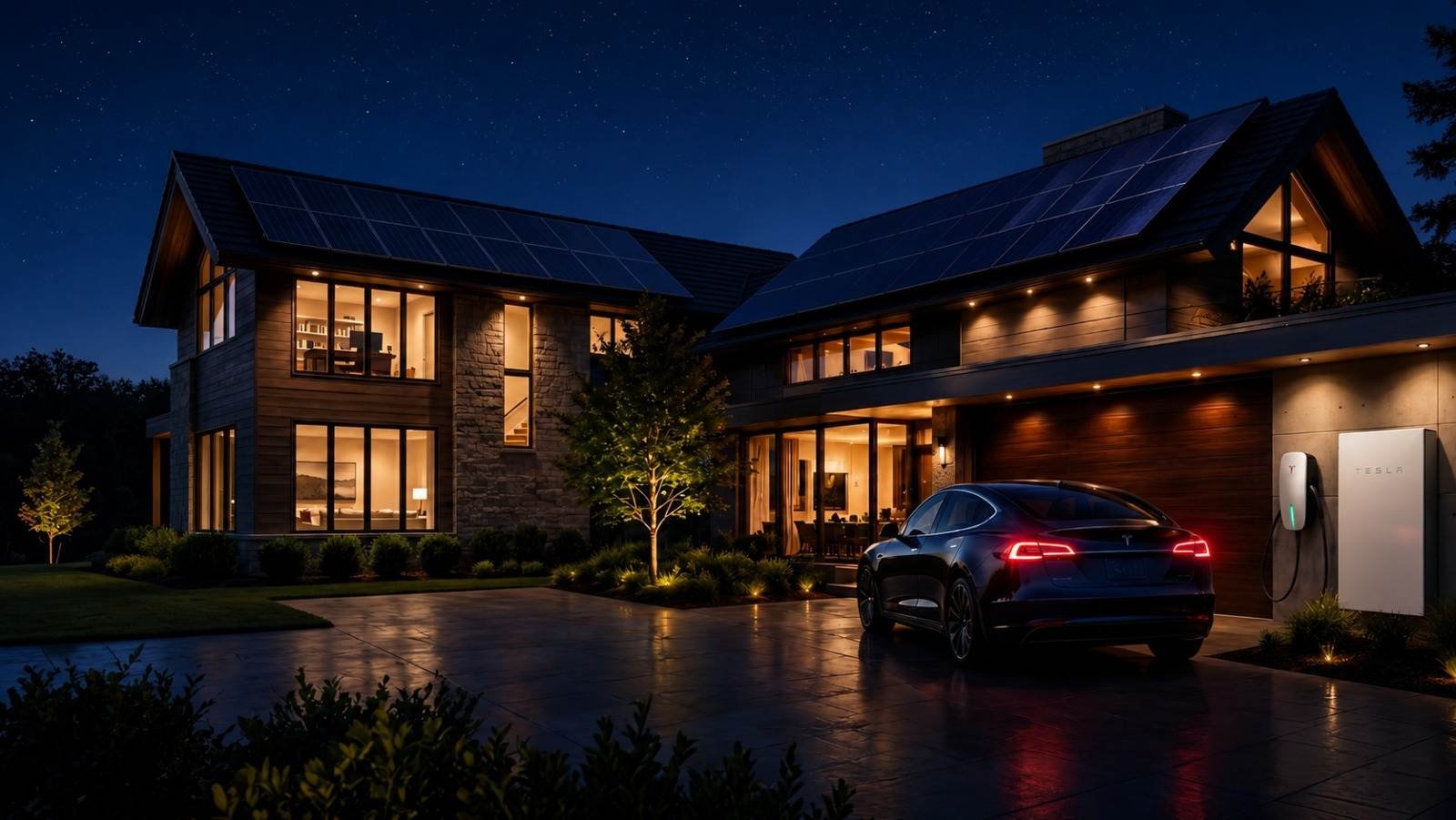
EV Charger Cost Calculator
Estimated installed cost
Includes labor, materials, and permit. State and utility rebates can lower this further.
Ballpark estimate. Your exact price comes from a free in-home assessment.
What this EV charger cost calculator estimates
This tool estimates the installed cost of a home Level 2 EV charger based on the factors that actually move the price: your panel's spare capacity, the distance from the panel to the charger, and the type of charger you choose. Most home installs land between $400 and $1,500, but the range is wide for a reason.
Installing a charger really means installing a dedicated 240-volt circuit, and the cost of that circuit depends almost entirely on your home. This calculator helps you anticipate where in the range you'll fall before you get a quote.
The biggest cost factors
- Distance from panel to charger, longer wire runs cost more
- Whether the run is an easy basement/garage path or through finished walls
- Whether your panel has a free breaker slot and spare capacity
- Whether a panel upgrade is needed first
- The charger itself, a Tesla Wall Connector vs a budget unit
- Local permit fees and inspection requirements
When the cost jumps
The single biggest swing is whether your existing panel can support the charger. If it can, you're often in the $400–$800 range for a straightforward garage install. If a panel upgrade is required first, add $1,500–$4,000, see panel upgrade cost for details.
A long, difficult wire run through finished walls, or a charger mounted far from the panel, also raises labor. The calculator factors distance in so your estimate reflects your real layout.
Lowering the cost
Before you install, check what incentives apply. The federal 30C tax credit expired for chargers placed in service after June 30, 2026, so utility and state rebates are where the savings live now, and many utilities still pay them. Our EV charger rebates page and Savings Finder show what you qualify for.
For the full breakdown of what drives the price, read how much EV charger installation costs.
Sharpening your estimate before the visit
Three photos turn this calculator's range into a near-quote: your panel with the door open (capacity and space tell half the story), the intended charger location, and the path between them. Send those with your estimate request and the confirmation visit becomes a formality rather than a discovery mission.
Distance dominates the math, so measure honestly, along the actual cable route (up walls, across ceilings), not the straight line. A 25-foot straight shot that routes 60 feet through framing prices as 60.
The three price bands, explained
Band one ($400–$700): panel and parking share a wall or sit within ~25 routed feet, spare capacity confirmed, surface or open-framing run. Most attached garages with 200A service land here. Band two ($700–$1,200): longer runs, finished-wall fishing, exterior-rated routing, or a 60A circuit for 48A charging. Band three ($1,200+): detached structures, trenching, or panel work riding along.
The bands are useful because they're diagnosable from your own description, and because any quote wildly outside your band deserves questions before signatures.
After the install: costs that don't exist
Part of pricing a charger honestly is listing what you won't pay. No fuel system maintenance, no oil changes tied to the commute, no charging-network memberships for daily driving, and no meaningful service costs on the charger itself, a hardwired unit has no moving parts and typically outlives the car that prompted it.
The single recurring line is electricity, visible on the same bill you already pay, at rates you can schedule around. Compare that operational silence with any gasoline month and the installation's payback framing becomes conservative: the circuit is the last fueling infrastructure the household buys for a decade.
Frequently asked questions
Most home Level 2 charger installations cost $400–$1,500 including labor and permit. Simple garage installs near the panel are cheapest; long wire runs or a required panel upgrade push the cost higher.
The estimate can include both. A quality Level 2 charger like the Tesla Wall Connector runs around $475 for the hardware, with installation labor on top. Some quotes bundle them; this calculator helps you see the installed total.
The main drivers are a long distance between your panel and charger, running wire through finished walls, and, most significantly, needing a panel upgrade because your service lacks spare capacity.
Often, yes. Many utilities offer rebates of $100–$700, and some states and cities add their own on top. Use our Savings Finder to see exactly what applies at your address.
Barely, the circuit is the cost, and it's brand-agnostic. The exceptions: hardwire-only models (skip the receptacle, add a connection), and 48A units that require the heavier 60A circuit.
A 32A plug-in charger on a NEMA 14-50, panel within a few feet, spare capacity confirmed: $300–$500 with permit in low-fee jurisdictions. Cheaper than that usually means something was skipped.
Almost always, trenching, conduit, and often a small sub-panel add real scope. The offset: the same trench can carry future circuits (shop tools, lighting, a second charger), so oversizing the conduit once converts later projects into wire pulls. Budget $1,500–$3,500 for typical detached runs and get the route walked before believing any number.