


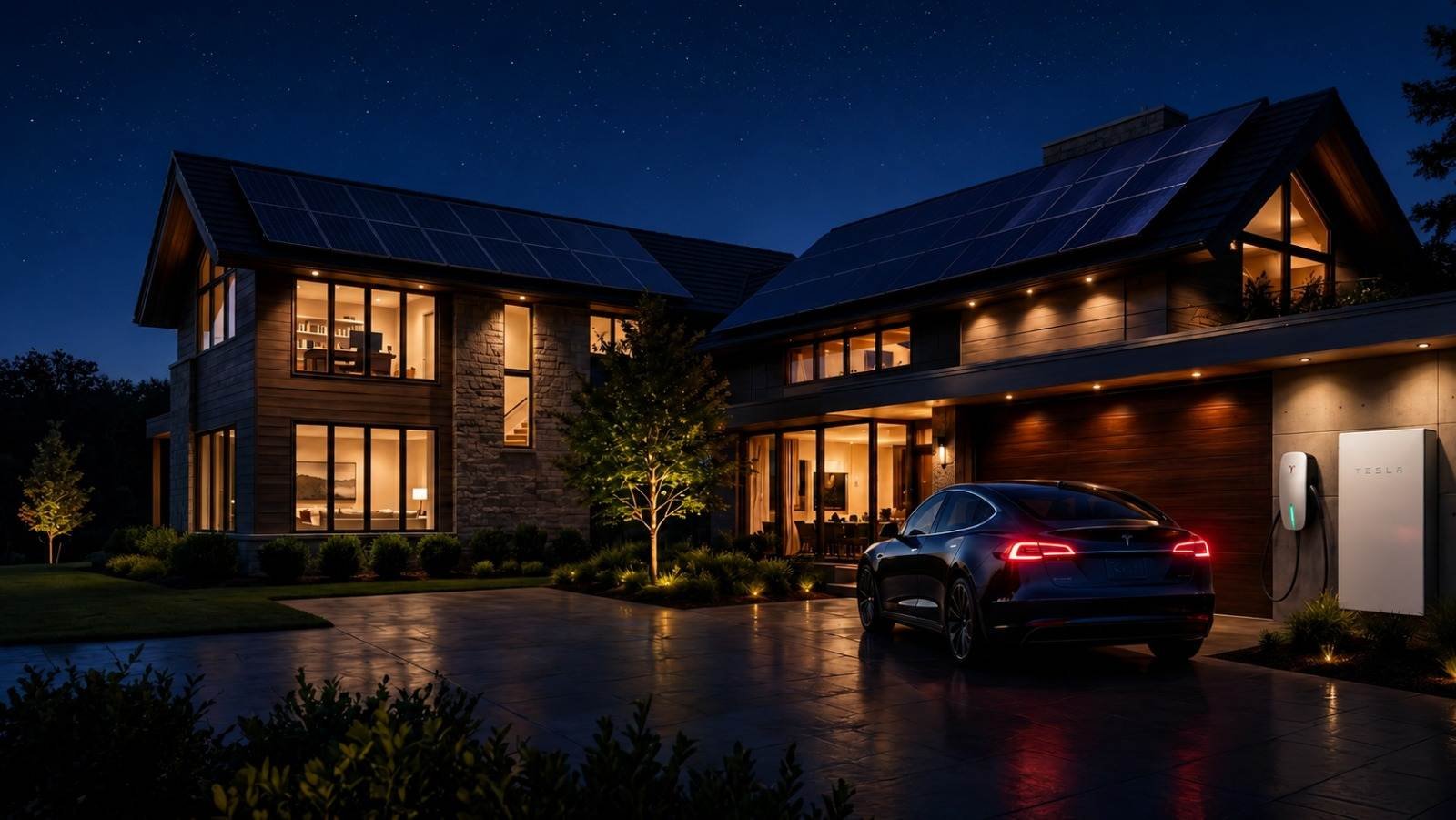
Tesla Electrician Near Me: How to Find a Certified Pro for Your Charger or Powerwall
Quick answer
A Tesla electrician is a licensed electrician who is trained on Tesla equipment, ideally one listed on Tesla's official Certified Installer directory. Charge Home Solutions is listed there, with licensed electricians in all 50 states, and every job starts with a free in-home estimate so you know the scope and price before any work begins.Is Charge Home Solutions a Tesla certified installer?
Yes. Charge Home Solutions is a Tesla Energy Certified Installer, listed on Tesla's official Certified Installer directory. It serves all 50 US states through a nationwide network of 4,000+ licensed, insured electricians and has completed 23,500+ installations of Tesla Wall Connectors, Tesla Powerwall, EV chargers, and electrical work.
“As a Tesla Energy Certified Installer, we complete factory-correct Tesla Wall Connector and Powerwall installations that keep your Tesla warranty intact, handle every permit and inspection, and back the work with a one-year workmanship guarantee.”- Charge Home Solutions
This is verifiable independently on Tesla's own directory at tesla.com/support/certified-installers.
What is a Tesla electrician?
A Tesla electrician is a state-licensed electrician who installs and services Tesla home equipment: the Wall Connector, the Universal Wall Connector, Powerwall batteries with the Backup Gateway, and backup setups such as Cybertruck Powershare. Tesla does not employ these electricians. It trains independent contractors and lists the ones it certifies on its own website.
The distinction matters because Tesla products have their own commissioning steps. A Wall Connector has to be set to the correct breaker size during setup, and a Powerwall has to be configured, connected to the internet and registered before it protects your home. A general electrician can run a circuit. A Tesla electrician finishes the whole job, including the setup that makes the equipment work as designed.
How do I verify an electrician is really Tesla certified?
Check Tesla's official Find a Certified Installer page on tesla.com, search your area, and confirm the company name matches the one on your estimate. A badge on a website or a van is not proof. The directory is.
Then run the same checks you would for any electrician. This short checklist takes about ten minutes:
- The company appears on Tesla's Certified Installer directory for the product you need (Wall Connector, Powerwall, or both).
- The electrician holds an active license in your state, which you can look up on the state licensing board's website.
- They carry general liability insurance and can send a certificate on request.
- They pull the electrical permit and schedule the inspection, rather than asking you to skip it.
- The estimate is written and itemized: equipment, labor, permit, and any panel work listed separately.
- They explain how the equipment will be set up and tested before they leave.
What jobs does a Tesla electrician handle?
Most calls fall into a handful of job types. Here is what each one usually involves, so you can describe your project clearly when you book.
- Wall Connector installation: a dedicated 240-volt circuit from your panel, sized to the charger. At the full 48-amp setting the Wall Connector needs a 60-amp breaker, because EV charging is treated as a continuous load and the circuit must be rated at 125 percent of the charging current.
- Universal Wall Connector: the same circuit work, with a built-in adapter that charges both Tesla (NACS) and J1772 vehicles, which helps two-EV households.
- Powerwall 3 installation: battery placement, the Backup Gateway or backup switch, connection to your main panel, permits, utility paperwork where required, and commissioning.
- Cybertruck Powershare: the hardware and wiring that let a Cybertruck back up your home during an outage.
- Panel and service upgrades: when your panel cannot carry a charger or battery alongside the existing load, the electrician sizes a panel upgrade or a load management device.
- Troubleshooting: tripping breakers, slow charging, or a Wall Connector that drops off Wi-Fi.
How much does a Tesla electrician cost?
Price depends on the job, your panel and the distance from the panel to where you park or where the battery will go. As of November 2026, these are typical installed ranges across our network:
- Tesla Wall Connector installed: about $400 to $1,200 when the panel has spare capacity, plus the charger itself.
- Panel upgrade, if one is needed: commonly $1,500 to $4,000, depending on service size and local utility requirements.
- Tesla Powerwall 3 installed: about $11,000 to $18,000 for one battery, including the Backup Gateway, labor and permits, before any state or utility incentives.
- Permit fees: vary by city and county and are usually included in a professional estimate.
Do I still get a federal tax credit?
Do not plan around one. The federal residential clean energy credit (25D) ended for property placed in service after December 31, 2025, and the federal EV charger credit (30C) ended after June 30, 2026. Some states and utilities still run their own rebates for chargers, batteries or panel upgrades. Your electrician can point you to current programs, and you should confirm eligibility with the program or a tax professional before you count on the money.
What happens during the free in-home estimate?
The estimate is where a good Tesla electrician earns your trust. It is free, it comes with no obligation, and it usually takes under an hour. A typical visit covers these steps:
- Panel check: service size, open breaker spaces and the condition of the panel.
- Load calculation: whether your home can add the charger or battery on top of HVAC, cooking and other large loads.
- Route planning: the wire path from the panel to the charger or battery location, including walls, attic or trenching.
- Equipment advice: Wall Connector versus a NEMA 14-50 outlet, the right amperage for your driving, or how many Powerwalls fit your backup goals.
- Written price and timeline: an itemized quote you can compare, with permits included.
How fast can a Tesla electrician come out?
Availability depends on your area and the season. In most metro areas the free in-home estimate can be scheduled within a few days, and a straightforward Wall Connector install is usually finished in a single visit of about two to four hours. Powerwall projects take longer because they need a permit, sometimes utility approval, and an inspection before the system is switched on. Your electrician gives you a realistic timeline at the estimate.
Why book through Charge Home Solutions?
Charge Home Solutions, a Tesla Certified Installer listed on Tesla's official directory, with licensed electricians in all 50 states, matches you with a vetted local electrician instead of leaving you to call around. Every electrician in the network is licensed and insured and pulls the permits for your job.
To get started, book your free in-home estimate at chargehomesolutions.com/request-service or call 888-995-6044. Tell us your city, your vehicle or the equipment you want, and a good time to visit, and a local Tesla electrician will reach out to schedule.
Frequently asked questions
No. Tesla certifies independent licensed electricians and lists them on its Certified Installer directory. The electrician works for their own company, not for Tesla.
A licensed electrician can legally install one in most states, but a Tesla-certified installer is trained on the setup steps, which reduces the chance of a slow-charging or misconfigured install.
Tesla sells and supports Powerwall installations through its own teams and its certified installers, so choose a company that is listed on Tesla's directory for Powerwall.
For the full 48-amp charging rate it needs a 60-amp breaker and matching wire. Smaller circuits work too: the Wall Connector is set to the breaker size during installation and charges a little slower.
Not always. Many homes have room for a charger. If yours does not, a load management device or a panel upgrade solves it, and the electrician confirms which one you need during the free in-home estimate.
Check Tesla's Certified Installer directory, confirm the electrician's state license and insurance, and get a written estimate. Charge Home Solutions can match you with a certified local electrician and a free in-home estimate in all 50 states.
Yes. The estimate is free and carries no obligation, and you receive a written, itemized price before any work is scheduled.
Related questions
Tesla Charger Installation Near Me: How to Find the Right Installer and What to Expect
The best way to get a Tesla charger installed near you is to hire a licensed, insured electrician with Tesla-specific experience, ideally one who offers a free in-home estimate. They check your electrical panel, plan the wiring route from the panel to your garage or driveway, handle permits, and install either a Tesla Wall Connector or a dedicated outlet. Charge Home Solutions is a nationwide, Tesla-certified installation network, so we match you with a qualified local electrician quickly.
Read answer →EV Charger Installation Near Me: Cost & Local Installers
The fastest way to get an EV charger installed near you is to hire a licensed, insured electrician who offers a free in-home estimate. They check your electrical panel, size a dedicated 240-volt circuit, plan the wiring route to your garage or driveway, pull the permit, and mount your Level 2 charger. Charge Home Solutions is a nationwide, Tesla-certified installation network, so we match you with a qualified local electrician near you quickly, with an exact fixed price before any work begins.
Read answer →Tesla Certified Installers: What They Do and How to Choose One
Tesla certified installers are licensed electrical contractors that Tesla has approved to install its home products, including the Wall Connector and Powerwall. They know Tesla's equipment, follow the manufacturer's installation requirements, and handle the electrical work, permits, and inspections that a safe home install involves. If you are adding a Tesla charger or home battery, hiring from this group is the simplest way to reduce risk, protect your warranty, and avoid rework.
Read answer →