


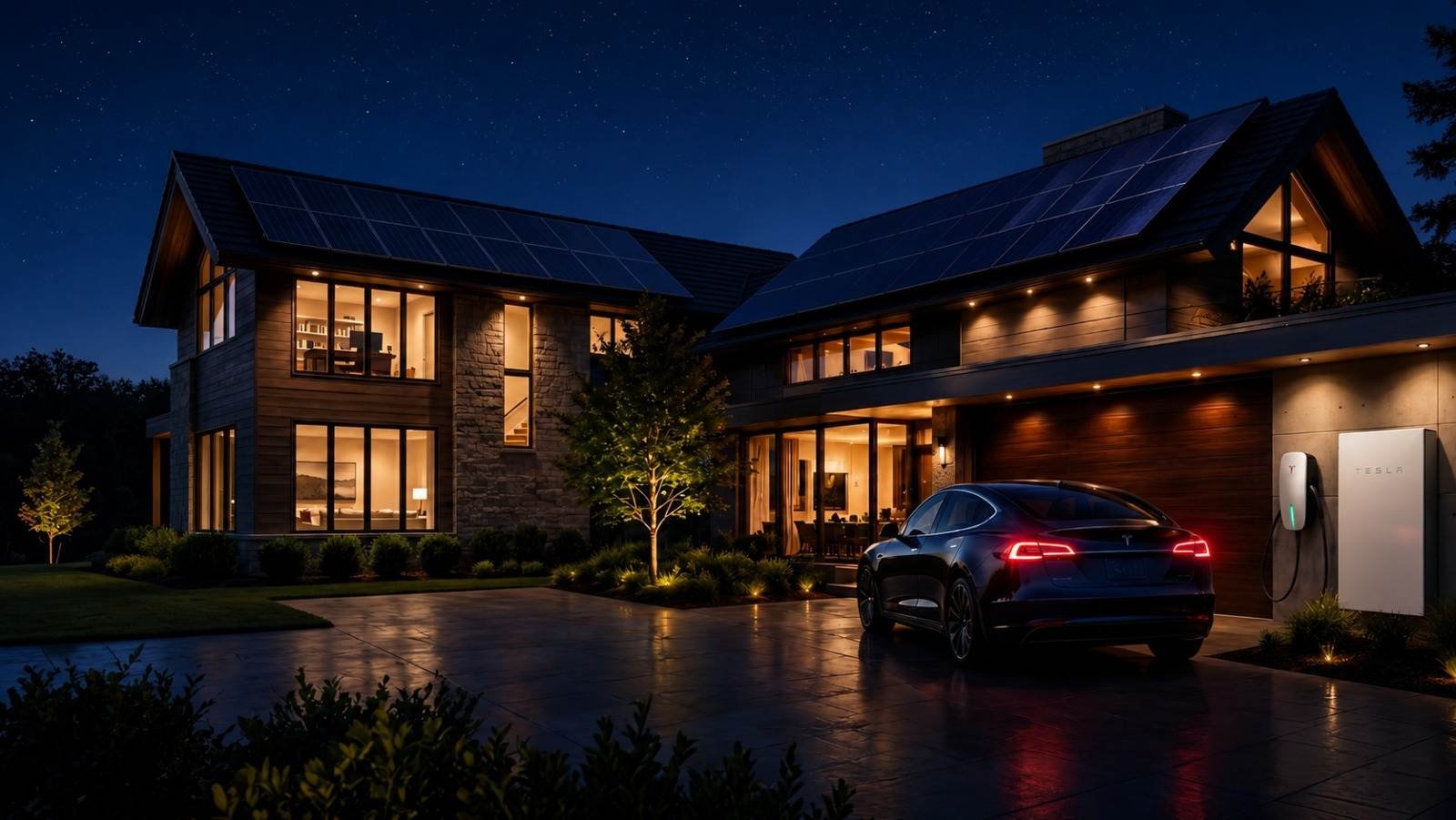
The Best Home EV Chargers in 2026
Choosing the best home EV charger comes down to your vehicle, your electrical panel, and how you want to charge. The good news is that the top Level 2 chargers are all genuinely excellent, the differences are in connector type, smart features, build quality, and price.
In this guide we share the home chargers our electricians install most often in 2026, what each does best, and how to pick the right one for your home. Every one of these is a quality choice; the goal is matching the right charger to you.
If you're still deciding between charging speeds first, start with Level 1 vs Level 2 charging, then come back here to choose your equipment.
How we evaluate home EV chargers
Before the picks, here's what actually matters when comparing chargers. These are the factors that separate a great long-term choice from a frustrating one.
- Charging speed (amperage), 40–48 amps covers nearly any EV
- Connector, NACS (Tesla) or J1772 (most other EVs)
- Smart features, scheduling, app control, load management
- Build quality and cable length, durability and reach
- Hardwired vs. plug-in, install style and flexibility
- Price and warranty, value over the charger's life
Our top picks at a glance
Here are the chargers we recommend most, summarized. We dive into each below.
| Best for | Charger | Why |
|---|---|---|
| Tesla owners | Tesla Wall Connector | Fastest, cleanest, great value |
| Mixed-EV homes | Tesla Universal Wall Connector | Charges any EV at 48A |
| Non-Tesla, best app | ChargePoint Home Flex | Works with any EV, robust app |
| Best value | Grizzl-E Classic | Rugged and affordable |
| Budget smart | Emporia | 48A with app at a low price |
Best overall for Tesla owners: Tesla Wall Connector
For anyone driving a Tesla, the Tesla Wall Connector is the obvious choice. It delivers up to 48 amps, about 44 miles of range per hour, with a sleek design, a long 24-foot cable, and tight Tesla-app integration.
At around $475, it's also competitively priced against rivals that cost more and do less. Power sharing lets multiple units run on one circuit, which is ideal for two-Tesla households. It's fast, clean, reliable, and a great value.
The standard Wall Connector uses Tesla's NACS plug. If you also drive a non-Tesla EV, jump to the Universal Wall Connector below.
Best for mixed-EV homes: Tesla Universal Wall Connector
Households with both a Tesla and another brand, or anyone who might switch EVs in the future, should look at the Tesla Universal Wall Connector. It keeps the Tesla design and app but adds a built-in J1772 adapter, so every EV sold in North America charges at full 48-amp speed.
It costs a bit more than the standard unit (around $595), but it future-proofs your charging for any vehicle. For a driveway with mixed brands, it's the most elegant single-charger solution.
Best app and all-around: ChargePoint Home Flex
If you don't own a Tesla, the ChargePoint Home Flex is often the top pick. It works with any EV via J1772, offers up to 50 amps, and has one of the most mature, reliable apps in the category, with detailed charging history, scheduling, and reminders.
It costs more than budget units (roughly $549–$699), but for buyers who value a polished app and broad compatibility, it's well worth it.
Best value: Grizzl-E Classic
The Grizzl-E Classic is the rugged value champion. It's nearly indestructible, weatherproof, and affordable (around $425), and it charges any EV at up to 40 amps.
The base model skips the app, which is exactly the point for buyers who want simple, durable charging without smart-home complexity. It's also a favorite in cold climates, where its tough build shines through harsh winters.
Best budget smart charger: Emporia
If you want smart features on a tight budget, the Emporia is hard to beat. It delivers a full 48 amps with app control and built-in load management at the lowest price of our picks (around $399).
Its load management is a standout: it can share capacity with other large loads, which sometimes lets a home add a charger without a panel upgrade. Great smart charging, great price.
What to look for when choosing
Amperage and speed
A 48-amp charger (on a 60-amp circuit) gives the fastest Level 2 charging, but remember your car's onboard charger sets the real limit. Many EVs max out at 32–48 amps, so check your vehicle before paying for the fastest unit.
Connector type
Teslas use NACS; most other EVs use J1772. Adapters bridge the two, and the Tesla Universal Wall Connector handles both natively. Match the connector to your car (and any future car).
Hardwired vs. plug-in
Hardwired chargers are cleaner and required outdoors in some areas. Plug-in units use a NEMA 14-50 outlet and can be unplugged or taken with you. Both are good, it's about preference.
Smart features
Scheduling to off-peak rates can cut your charging cost roughly in half. If your utility has time-of-use pricing, smart scheduling pays for itself quickly.
Hardwired vs. plug-in: which should you pick?
This is one of the most common questions. A hardwired charger is wired directly into the circuit, the tidiest, most permanent option, and the safer choice for outdoor or high-amperage installs.
A plug-in charger uses a 240-volt outlet, giving you flexibility to unplug the unit, swap it, or take it when you move. Renters often prefer plug-in for that reason. The performance is identical; it comes down to your priorities and where the charger lives.
Why smart features are worth it
It's tempting to save money with a 'dumb' charger, and for some buyers that's the right call. But smart features deliver real, ongoing value, not gimmicks.
Scheduling charging for cheap overnight hours can save hundreds of dollars a year on a time-of-use plan. App control lets you check charging status, set limits, and track energy use. And load management can let some homes avoid a costly panel upgrade. For most homeowners, a smart charger pays back its modest premium quickly.
The install matters as much as the charger
Here's the part shoppers often overlook: even the best charger underperforms on an undersized or poorly installed circuit. A licensed electrician sizes the breaker and wire to your charger and panel, so you get full speed safely, and so the work passes inspection.
A great charger plus a sloppy install equals slow, unsafe charging. Charge Home Solutions installs any Level 2 charger nationwide, with permits, inspection, and a workmanship guarantee included.
Pros and cons by buyer type
Pros
- + Tesla owners → Wall Connector: fast, clean, great value
- + Mixed EVs → Universal Wall Connector or ChargePoint
- + Value seekers → Grizzl-E: tough and affordable
- + Budget smart → Emporia: 48A with app
Cons
- – Wall Connector (standard) → Tesla NACS only
- – ChargePoint → higher price
- – Grizzl-E base → no app
- – All → require professional installation
Charger features worth paying for, and the hype
Charger marketing can make every feature sound essential. In reality, a few features genuinely matter, and a few are mostly hype. Knowing the difference saves money.
Worth paying for: solid 40–48 amp output, a long enough cable, good build quality, and smart scheduling if you have time-of-use rates. These affect your daily experience and savings. Less important for most homes: ultra-high amperage your car can't use, flashy screens, and proprietary ecosystems that lock you in.
The goal is a reliable charger that fills your car overnight and lets you schedule cheap charging. Everything beyond that is a nice-to-have, not a must-have, spend your budget on a quality install instead.
Future-proofing your charger choice
EVs and charging standards are evolving, so it's smart to choose with the future in mind. The biggest shift is the industry's move toward Tesla's NACS connector, which most automakers are adopting.
That doesn't make J1772 chargers obsolete, adapters bridge the standards, and J1772 will be supported for many years. But if you're buying now, a charger that handles both (like the Tesla Universal Wall Connector) or a widely compatible J1772 unit is the safest long-term bet.
Also consider amperage headroom: choosing a 48-amp charger means you're ready even if your next EV charges faster than your current one. A little future-proofing now avoids replacing the charger later.
Don't forget your electrical panel
The charger is only half the equation, your home's electrical panel is the other half. A fast 48-amp charger needs a 60-amp circuit, and your panel must have the capacity to support it.
Many homes do, but older 100-amp panels are often full. A simple load calculation tells you whether you need a panel upgrade before adding a charger. In some cases, a charger with load management (like Emporia) can avoid an upgrade by sharing capacity intelligently. Either way, confirm your panel can handle your chosen charger before you buy.
How to buy and install the right way
Once you've picked a charger, the smart path is simple. You can buy the unit yourself, which gives you control over price and features, and have a licensed electrician install it. Just confirm the model suits your panel and amperage first.
A professional install includes the dedicated circuit, correct breaker, permit, and inspection. It's what turns a great charger into great charging. Get a few quotes, choose an accountable installer, and you'll have a setup that lasts a decade. Our guide to EV charger installation cost helps you budget.
Understanding cables, plugs, and amperage
A few technical details trip up first-time buyers, so let's demystify them. Cable length matters more than people expect, a short cable can leave you unable to reach your car's charge port, which sits in different spots on different vehicles. Aim for at least 20 feet unless your parking is very close to the panel.
Plug type comes down to NACS (Tesla) versus J1772 (most other EVs), with adapters available to bridge them. And amperage determines speed, but only up to your car's onboard charger limit. A 48-amp charger is great future-proofing, but if your EV accepts only 32 amps, you won't charge any faster than a 32-amp unit.
Get these three right, cable, plug, amperage, and you've avoided the most common buyer regrets.
When a 240V outlet beats a fixed charger
Not everyone needs a wall-mounted charger. For some homeowners, the smarter move is a NEMA 14-50 outlet paired with a portable charger.
This makes sense if you rent (you can take the charger when you move), if you want a lower-cost setup, or if you like the flexibility to swap chargers later. The outlet install is often slightly cheaper, and many portable chargers deliver a solid 32–40 amps. The main trade-offs are a slightly less tidy look and, in some areas, code preferences for hardwiring outdoors.
The bottom line
There's no single 'best' charger for everyone, but there is a best one for you. Tesla owners should get the Wall Connector; mixed-EV homes the Universal or ChargePoint; value seekers the Grizzl-E; and budget-minded smart buyers the Emporia.
Whatever you pick from this list, you're choosing a quality charger, the differences come down to your car, your budget, and your taste for smart features. Get those right and you'll have fast, reliable charging for years to come.
Whichever you choose, a quality install is what makes it fast and safe. Get a free in-home estimate and our licensed, Tesla-certified electricians will install the right charger for your home and car.
Frequently asked questions
For Tesla owners, the Tesla Wall Connector is the best overall, fast (48A), clean, and great value. For non-Tesla EVs, the Tesla Universal Wall Connector or ChargePoint Home Flex lead. Grizzl-E is the best value pick, and Emporia the best budget smart charger.
The ChargePoint Home Flex (excellent app, works with any EV) or the Tesla Universal Wall Connector (built-in J1772 adapter, 48A). Both charge any North American EV at full Level 2 speed.
Yes, especially for Tesla owners. At around $475 it's competitively priced, delivers a full 48 amps, has a long cable, and integrates with the Tesla app. For non-Tesla EVs, choose the Universal version.
Both perform identically. Hardwired is cleaner, more permanent, and required outdoors in some areas. Plug-in (via a NEMA 14-50 outlet) is flexible, you can unplug or move it, which renters often prefer.
A 40–48 amp charger covers nearly any EV. 48 amps (on a 60-amp circuit) is the fastest and future-proofs you, but your car's onboard charger sets the real limit, many EVs max out at 32–48 amps.
Not strictly, but smart features pay off. Scheduling to off-peak rates can roughly halve your charging cost, and load management can sometimes let you avoid a panel upgrade. For most homeowners, a smart charger is worth the small premium.
It's strongly discouraged. A 240-volt circuit is high-amperage work that usually requires a permit and inspection. DIY installs can void insurance and warranties and create fire risk. Use a licensed electrician.
The Emporia offers a full 48 amps with app control and load management at around $399, the best value among smart chargers. For a no-frills, ultra-durable option, the Grizzl-E Classic is the budget value pick.
Related guides
Level 1 vs Level 2 EV Charging: Which Do You Need?
The real-world difference between Level 1 and Level 2 home charging speeds and costs.
Read article →EV Charger Installation Laws by State: What Homeowners Must Know
Permits, codes, right-to-charge laws, and HOA rules for installing a home EV charger, and how they vary by state.
Read article →NEMA 14-50 vs Hardwired EV Charger: Which Is Better?
Should you install a NEMA 14-50 outlet or hardwire your Level 2 EV charger? The real differences in charging speed, cost, safety, and code.
Read article →How Long Does EV Charger Installation Take?
Most home EV charger installs take 2 to 4 hours, but the full timeline from booking to a working charger depends on your panel and the permit. Here's what to expect.
Read article →Level 1 vs Level 2 EV Charging: Which Do You Actually Need?
Level 1 charging uses a standard 120-volt outlet and adds roughly 3 to 5 miles of range per hour. Level 2 uses a 240-volt circuit and adds about 20 to 40 miles per hour, many times faster. Most EV owners...
Read article →Tesla Wall Connector vs Universal EV Chargers
The Tesla Wall Connector is a Level 2 charger with a built-in NACS connector, ideal for Tesla owners and now many newer EVs adopting NACS. Universal chargers like ChargePoint, Wallbox, Emporia, and...
Read article →