

Level 1 vs Level 2 EV Charging: Which Do You Need?
When you bring home your first EV, one of the earliest questions is **Level 1 vs Level 2 charging**, which one do you actually need? It's an important decision, because it determines how you'll live with your car every single day.
Here's the quick answer: Level 1 uses a standard 120-volt household outlet and adds about 3–5 miles of range per hour. Level 2 uses a dedicated 240-volt circuit and adds 25–40 miles per hour, roughly 5 to 7 times faster. For most EV owners, Level 2 is the difference between waking up to a full battery and never quite catching up.
But the right choice depends on your car, your driving, and your home. This guide explains both clearly, with real-world examples, so you can decide with confidence. If you're also weighing equipment, our guide to the best home EV chargers is a useful companion.
It's a question worth getting right, because charging is something you'll do nearly every day for as long as you own the car. The wrong choice means daily frustration; the right one means you barely think about charging at all. Let's make sure you land on the right one.
The quick answer
If you drive a full-battery EV and more than about 30 miles a day, you'll want Level 2. If you drive very little, or own a plug-in hybrid with a small battery, Level 1 might be enough to start. Most owners who begin with Level 1 upgrade to Level 2 within a few months, once they experience how much easier daily charging becomes.
The simple rule
Level 1 trickles; Level 2 fills overnight. If your EV is your main car, Level 2 is almost always worth installing.
What is Level 1 charging?
Level 1 charging is the most basic option: you plug your EV into a standard 120-volt household outlet using the cable that came with the car. There's nothing to install, and it works anywhere you have a regular outlet.
The catch is speed. Level 1 adds only about 3–5 miles of range per hour. Plugged in overnight for 10–12 hours, that's roughly 40–50 miles, fine if you drive a little, but far too slow to fully recharge a depleted full-battery EV between days.
Think of Level 1 as a trickle. It's a useful backup, a good fit for plug-in hybrids, and workable for very low-mileage drivers. For most full EVs, though, it can't keep up with daily use.
What is Level 2 charging?
Level 2 charging uses a dedicated 240-volt circuit, the same voltage that powers your electric dryer or range. It requires a professional installation, but the payoff is dramatic: 25–40 miles of range per hour, depending on the charger and your vehicle.
At that speed, even a nearly empty EV fully recharges overnight. You plug in when you get home and wake up to a full battery, every day. This is why Level 2 is the standard for home charging and the setup the vast majority of EV owners choose.
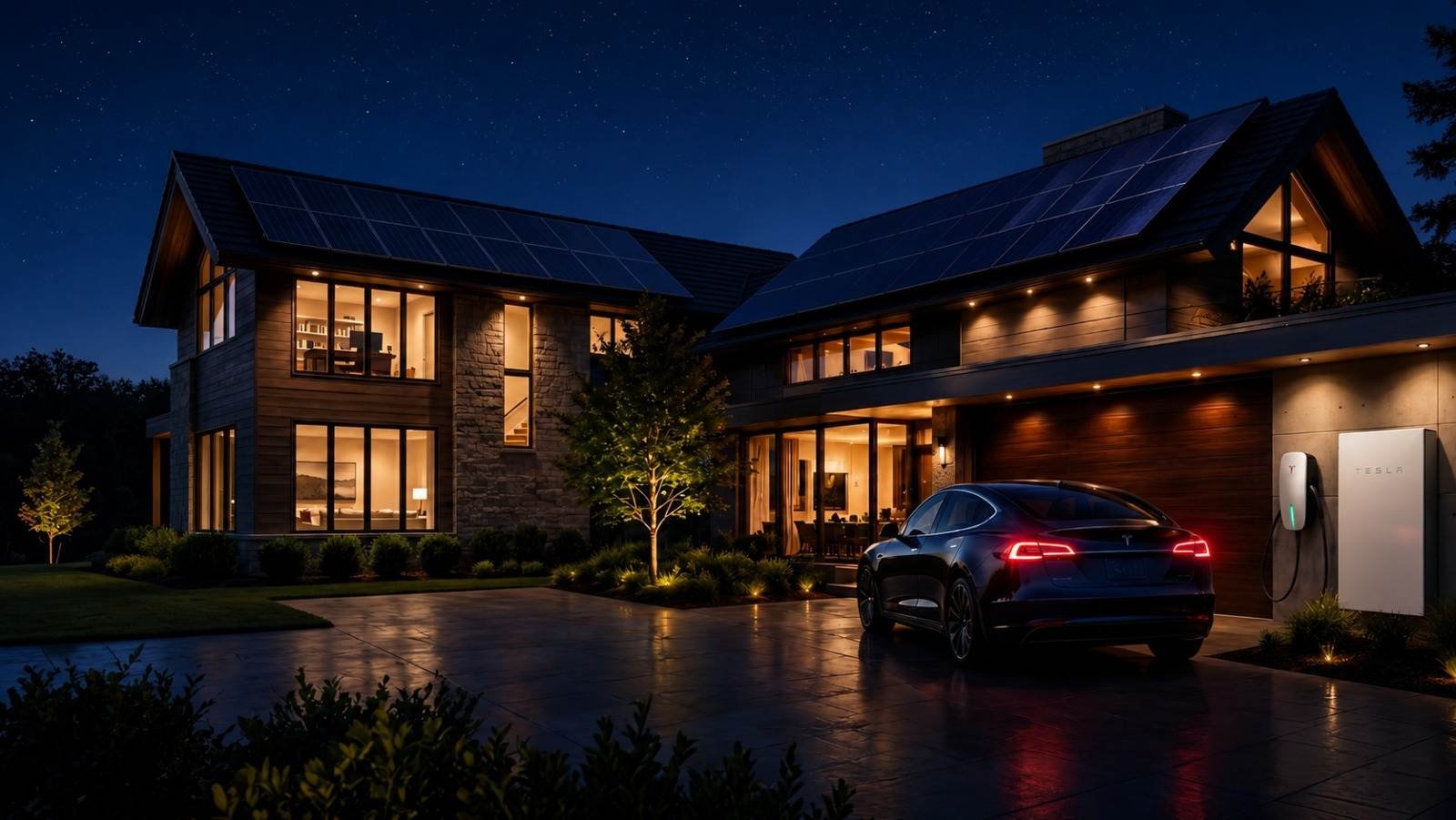
A Level 2 setup pairs a 240-volt circuit with a Level 2 charger, like the Tesla Wall Connector, sized to your car and panel.
Level 1 vs Level 2: side by side
Here's a direct comparison of the two charging levels on the factors that matter most.
| Factor | Level 1 (120V) | Level 2 (240V) |
|---|---|---|
| Speed | 3–5 miles/hour | 25–40 miles/hour |
| Overnight range | ~40–50 miles | Full charge |
| Installation | None, uses any outlet | Dedicated 240V circuit |
| Best for | Plug-in hybrids, low mileage | Full EVs, daily driving |
| Cost | $0 (uses included cable) | $400–$1,500 install |
What the speed difference means in real life
Numbers on a page don't always land, so picture a typical day. You drive 40 miles round-trip to work and back, then plug in at 6 p.m.
On Level 1, by 7 a.m. you've recovered maybe 45–55 miles, just barely enough to replace what you used, with nothing to spare for errands or a longer day. On Level 2, you've fully recharged with hours to spare, ready for anything. Over a busy week, Level 1 drivers can find themselves slowly falling behind, while Level 2 drivers never think about it.
Want to see exact numbers for your car? Our EV charging time calculator shows how long a charge takes at different amperages.
Cost: charger and installation
Level 1 has no added cost, you use the cable included with your EV and any existing outlet. That's its biggest advantage.
Level 2 requires a charger (often $400–$700) and installation of a 240-volt circuit, typically $400–$1,500 total depending on your home. Our guide to EV charger installation cost breaks down every factor. The good news is that many utilities still rebate part of the cost, and some states run their own charger programs, check our Savings Finder.
Which is right for you?
The daily commuter with a full EV
If your EV is your primary car and you drive a typical commute, install Level 2. The convenience and reliability are worth it, and you'll never worry about catching up.
The plug-in hybrid owner
With a small battery (often 20–40 miles of electric range), Level 1 can fully recharge overnight, so it may be all you need. If you want to maximize electric driving, Level 2 still helps.
The low-mileage driver
If you drive only a few miles most days, Level 1's 40–50 overnight miles may comfortably cover you. Many start here and upgrade later if their driving increases.
The two-EV household
With two EVs, Level 2 becomes almost essential. A single Level 2 charger with power sharing, or two circuits, keeps both cars ready without a nightly juggle.
Can you charge a Tesla on Level 1?
Yes, a Tesla can charge on a standard 120-volt outlet using the Mobile Connector. But with Tesla's large batteries, Level 1 is genuinely slow, recovering only a few miles per hour. It works in a pinch, but nearly all Tesla owners install Level 2 at home.
For the fastest and cleanest setup, Teslas pair best with the Tesla Wall Connector, which delivers up to 44 miles of range per hour.
What about Level 3 (DC fast charging)?
You may see 'Level 3' mentioned. That refers to DC fast charging, the high-powered public stations like Tesla Superchargers that add 100–200+ miles in 15–30 minutes. It's for travel, not home use; the equipment is far too expensive and power-hungry for a house.
So at home, your real choice is Level 1 vs Level 2. DC fast charging fills the gaps on road trips, as we cover in Wall Connector vs Supercharger.
Pros and cons of each
Pros
- + Level 1: zero install cost, works anywhere
- + Level 1: fine for hybrids and light driving
- + Level 2: full charge overnight, every day
- + Level 2: works with every EV and adds resale appeal
Cons
- – Level 1: too slow for most full EVs
- – Level 1: can't keep up with heavy driving
- – Level 2: requires a one-time professional install
- – Level 2: may need a panel upgrade in older homes
How to upgrade to Level 2 at home
Upgrading is straightforward. A licensed electrician assesses your panel, runs a dedicated 240-volt circuit, mounts and wires the charger, pulls the permit, and schedules inspection. Most installs are completed in a few hours.
If your panel is older or full, you may need a panel upgrade first, a load calculation confirms whether that's the case. From there, you're set for years of effortless home charging.
Common mistakes to avoid
- **Assuming Level 1 is enough**, many full-EV owners underestimate how often they'll fall behind
- **Skipping the load check**, confirm your panel can support Level 2 before buying a charger
- **Buying the wrong connector**, match NACS (Tesla) or J1772 to your car
- **Going unpermitted**, a 240V circuit needs a permit and inspection
- **Ignoring rebates**, you may be leaving hundreds of dollars on the table
Why Level 2 became the home standard
It's worth understanding why nearly every EV owner lands on Level 2. Early EVs had small batteries, so Level 1's trickle could keep up. As batteries grew to deliver 250–350 miles of range, Level 1 simply couldn't replenish that much energy overnight.
Level 2's 240-volt circuit roughly quadruples the power available, which is why it can fully recharge even a large battery while you sleep. The charging standards (J1772 for most EVs, NACS for Tesla) were built around this, and automakers now design cars assuming owners will charge at Level 2 at home.
In short, Level 2 became the standard because it matches how people actually use EVs: drive during the day, charge at night, never think about it. It's the setup the entire industry is built around.
Home charging vs public charging
Some new EV owners wonder if they can skip home charging and rely on public stations. You can, but it's a worse experience for daily life.
Public Level 2 chargers (at malls, garages, workplaces) are useful while you're parked anyway, and DC fast chargers are great for road trips. But neither matches the convenience of plugging in at home each night for pennies on the dollar. Public charging means driving somewhere, waiting, and often paying more.
Home Level 2 charging turns 'where do I charge?' into a non-question. It's the foundation; public charging is the supplement, a point we explore further in Wall Connector vs Supercharger.
How Level 2 affects your electric bill
Adding a Level 2 charger does increase your home's electricity use, but the cost is far lower than the gasoline it replaces, and there are ways to keep it low.
A typical driver might add $40–$50 a month to their electric bill while eliminating a much larger gas expense. The biggest lever is time-of-use rates: a smart charger scheduled for cheap overnight hours can cut your charging cost dramatically. Pairing with solar reduces it even further.
So while you'll see your power bill tick up, your total cost of driving falls, usually by a wide margin. Use our EV charging savings calculator to see your own numbers.
Does Level 2 add value to your home?
Increasingly, yes. As EV adoption grows, a professionally installed Level 2 charger, or even just an EV-ready 240-volt circuit, is a feature buyers actively look for, much like a finished garage or solar panels.
A permitted, code-compliant install is the key. Unpermitted DIY work can be a liability during a sale, while a clean professional install is a genuine selling point. If you're not ready for a charger yet, ask about EV-ready wiring to prepare the circuit for later.
The bottom line
Level 1 is the no-install trickle that suits plug-in hybrids and light drivers. Level 2 is the overnight full charge that nearly every full-EV owner ends up wanting, faster, more convenient, and well worth the one-time install.
If you're on the fence, here's the honest guidance from our electricians: unless you drive very little or own a plug-in hybrid, plan for Level 2. It's the upgrade EV owners almost never regret, and the one most wish they'd done from day one.
Ready to set up proper home charging? Charge Home Solutions installs Level 2 chargers nationwide with permits included. Get a free in-home estimate to see your exact price.
Frequently asked questions
Level 1 uses a standard 120-volt outlet and adds about 3–5 miles of range per hour. Level 2 uses a dedicated 240-volt circuit and adds 25–40 miles per hour, roughly 5–7 times faster. Level 2 fully recharges most EVs overnight; Level 1 often can't keep up.
For most full-EV owners, yes. Level 2 fully recharges your car overnight, so you wake up ready every day. The one-time install cost ($400–$1,500) is offset by years of convenience, and utility incentives can trim it further. Most Level 1 users upgrade within months.
Level 1 adds about 3–5 miles of range per hour, so an overnight 10–12 hour charge recovers roughly 40–50 miles. That's fine for plug-in hybrids and light driving, but too slow to fully recharge a depleted full-battery EV.
Yes, using the Mobile Connector on a standard outlet, but it's slow given Tesla's large batteries, recovering only a few miles per hour. Nearly all Tesla owners install Level 2 (like the Wall Connector) for daily charging.
Yes. Level 2 requires a dedicated 240-volt circuit, which is regulated electrical work needing a permit and inspection. A licensed electrician sizes the circuit correctly and ensures it passes inspection.
Most Level 2 installs run $400–$1,500, including the charger and a dedicated 240V circuit. Homes that need a panel upgrade pay more. Utility rebates can offset a meaningful share; the federal charger credit is no longer available for installs completed after June 30, 2026.
Yes, when professionally installed. A licensed electrician sizes the breaker and wire correctly, grounds the circuit, and passes inspection. The danger comes from undersized or unpermitted DIY work, not from Level 2 charging itself.
Level 3 is DC fast charging, the high-powered public stations (like Tesla Superchargers) that add 100–200+ miles in 15–30 minutes. It's for travel, not home use; the equipment is far too expensive and power-hungry for a house. At home, your choice is Level 1 vs Level 2.
Related guides
The Best Home EV Chargers in 2026
Our pick of the best Level 2 home EV chargers compared on speed, features, and value.
Read article →EV Charger Installation Laws by State: What Homeowners Must Know
Permits, codes, right-to-charge laws, and HOA rules for installing a home EV charger, and how they vary by state.
Read article →NEMA 14-50 vs Hardwired EV Charger: Which Is Better?
Should you install a NEMA 14-50 outlet or hardwire your Level 2 EV charger? The real differences in charging speed, cost, safety, and code.
Read article →How Long Does EV Charger Installation Take?
Most home EV charger installs take 2 to 4 hours, but the full timeline from booking to a working charger depends on your panel and the permit. Here's what to expect.
Read article →How Much Does EV Charger Installation Cost in 2026?
A full breakdown of Level 2 home EV charger installation costs, what drives the price, and how to save.
Read article →Tesla Wall Connector vs Mobile Connector
Which Tesla home charging option is right for you, speed, cost, and convenience compared.
Read article →