


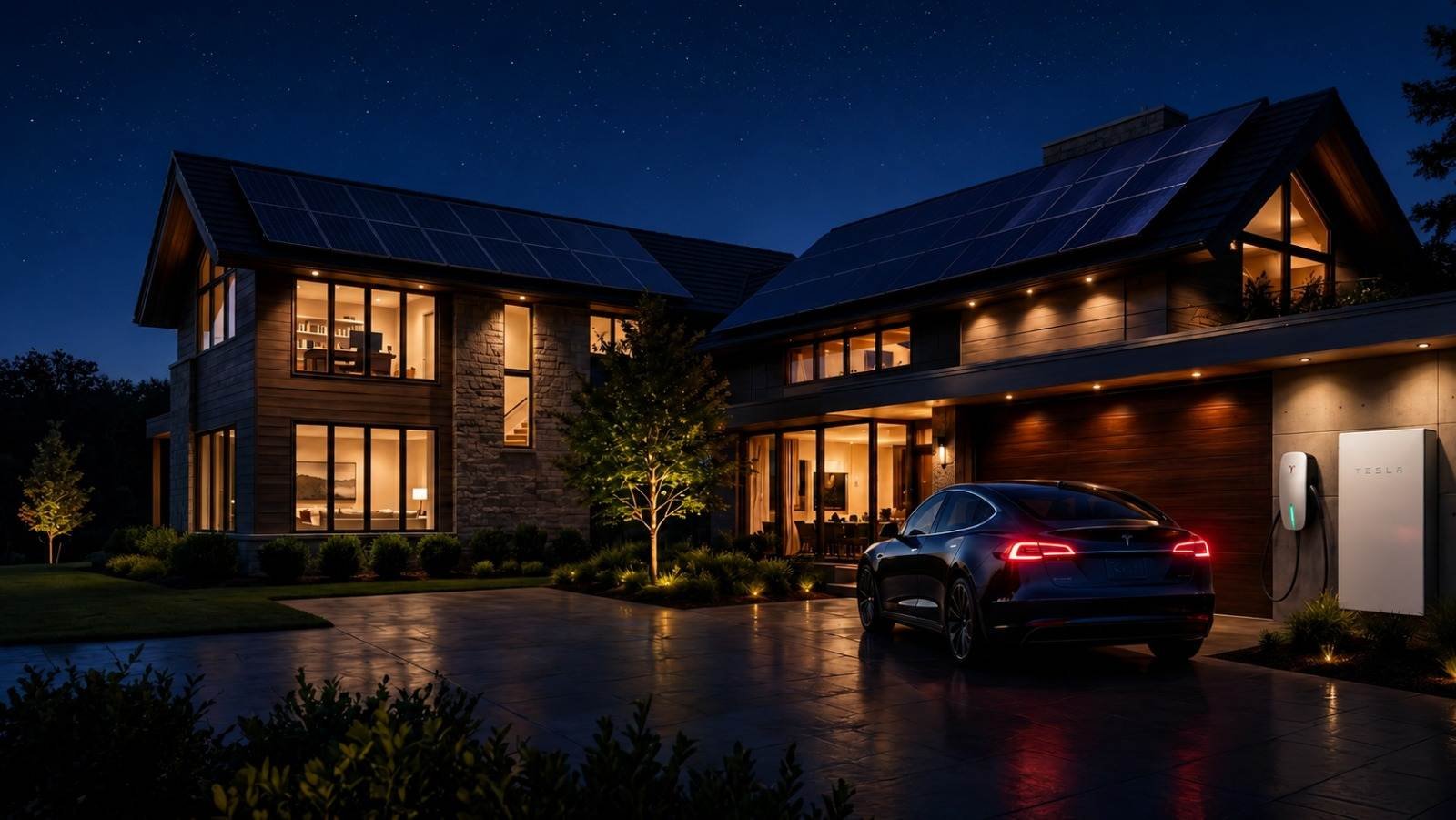
How to Prepare Your Tacoma Home and Garage for a Tesla and the EV Future
Start with your panel: how much capacity do you really have?
Your electrical panel is the first thing a licensed electrician evaluates. Home EV charging is a continuous, high-draw load, so the question is not just the panel's rated size but how much of that capacity your home already uses.
A few things shape the answer:
If capacity is tight, there are often solutions short of a full service upgrade. Load-management features, a lower-amperage charger setting, or a load calculation done by the electrician may allow a charger on your existing panel. When a service upgrade is the right call, it is better to know that up front than to discover it mid-project.
- Panel amperage. Many Tacoma homes, especially older ones in neighborhoods like the North End, Hilltop and Proctor, were built when 100-amp service was common. Newer or renovated homes often have 150 or 200 amps.
- Existing large loads. Electric furnaces or heat pumps, electric ranges, dryers, hot tubs and workshop equipment all count.
- Available breaker space. Even with spare capacity, a full panel may need rearranging or a subpanel.
- Panel condition and brand. An electrician will check for age, wear and any known problem equipment before adding a major load.
Choose the right circuit and garage location
Level 2 home charging uses a dedicated circuit, meaning the charger has its own breaker and wiring that is not shared with outlets or appliances. The right circuit size depends on the charger you choose and the car you drive. A licensed electrician sizes the breaker and wire for the equipment and the local code.
Location matters just as much as amperage:
If two vehicles may share the space someday, tell your electrician now. Running conduit sized for the future is a small step today and a much larger one later.
- Distance from the panel. A longer wire run, such as a panel in the basement and a charger on the far side of the garage, takes more labor and material.
- Where the charge port sits. Think about where you park and the length of the cable. Teslas have a rear-left charge port, which affects the ideal mounting spot.
- Detached garages and carports. These may need trenching or a subpanel, which changes the scope.
- Finished walls and ceilings. Running wire through finished drywall or a crawlspace is different from working in an open, unfinished garage.
Tesla Wall Connector options
Tesla offers home charging hardware designed to work with its vehicles, and the main choice is how you want it connected and what you want it to do.
In Tacoma's damp climate, an outdoor or carport installation should use equipment rated for the environment, and an electrician will make sure the mounting, conduit and weatherproofing fit your situation. If your garage is attached and dry, the choice is mostly about convenience and appearance.
For the full step-by-step process, see our Tesla installation hub at chargehomesolutions.com/tesla-installation-hub/.
- Wall Connector. A hardwired, wall-mounted unit built for daily home charging with a clean look and a tidy cable.
- Universal Wall Connector. Designed to work with Tesla vehicles and, with an adapter, many other EVs, which is helpful if your household might drive more than one brand over time.
- Mobile Connector with an outlet. A 240-volt outlet can be installed for the portable cord. It is flexible, but a hardwired unit is usually the more permanent, higher-performance setup.
Powerwall backup: a strong fit for Pacific Northwest weather
Windstorms, heavy rain and winter storms can cause outages in the Puget Sound region. A Tesla Powerwall home battery stores electricity and can keep selected circuits running when the grid goes down, which is also useful if your EV is part of your daily routine.
When planning, think about:
A battery does not replace the need for good panel planning. It is one more reason to have a single, qualified electrician look at the whole picture.
- What you want backed up. Whole-home or select essentials like refrigeration, lighting, internet, a furnace blower and medical or work equipment.
- Where it mounts. Powerwall is designed for indoor or outdoor installation, but clearances, wall space and local requirements still apply.
- How it coordinates with your panel. Installing the charger and battery together can be more efficient than doing them in separate visits, since both involve your panel and load planning.
- Solar, now or later. If rooftop solar is a possibility, mention it so the equipment and wiring are planned with it in mind.
Permits and inspections in Tacoma: the typical flow
EV charger and battery installations generally require an electrical permit and an inspection. Who issues the permit depends on your address, since Tacoma-area properties may fall under the City of Tacoma or other jurisdictions in Pierce County, and the state Department of Labor and Industries oversees electrical work in Washington. Your electrician confirms which applies to you.
The usual flow looks like this:
1. Site assessment. The electrician reviews your panel, load, garage layout and where the equipment will go. 2. Scope and estimate. You receive a written scope based on what was found. 3. Permit. The licensed electrician pulls the electrical permit for the job. 4. Installation. Wiring, breaker, mounting and equipment setup are completed. 5. Inspection. A local inspector verifies the work meets code. 6. Final setup. The charger is commissioned and you are shown how to use it.
Permit timing and inspection scheduling can vary with season and workload, so it is worth asking for a realistic timeline instead of assuming a fixed one.
What affects cost in the Tacoma area
There is no single price for a home EV install, because homes differ so much. The main factors are:
A free in-home estimate is the reliable way to get a real number, because a technician can see your panel and garage instead of guessing.
- Panel capacity and whether a service upgrade or subpanel is needed
- Wire length from the panel to the charger
- Indoor, outdoor, attached or detached garage
- Trenching or conduit work, and finished versus open walls
- The charger model and any battery or solar equipment
- Permit and inspection fees set by the local jurisdiction
Rebates and incentives: what to know
The federal 30C EV-charger tax credit has expired, so it should not be part of your planning. Incentives that do exist are local and change over time. Utilities that serve the Tacoma area, including Tacoma Public Utilities and Puget Sound Energy, have offered or explored EV-related programs at various points, and Washington State has had its own EV policies. Eligibility, amounts and availability can change, so confirm current details directly with your utility and the state before you buy. Your installer can tell you which equipment documentation a program may require.
Future-proofing: small decisions that pay off later
- Size the infrastructure generously. Conduit and wire capacity for a second charger costs far less during the first install.
- Keep panel space. Leave room for future loads like a heat pump, an induction range or a second EV.
- Plan for solar and storage. Even if you are not ready, a layout that allows it avoids rework.
- Choose flexible hardware. A charger that works with more than one vehicle brand keeps options open.
- Document everything. Keep permit records and equipment details, which helps with insurance, resale and future work.
Why work with a Tesla-certified electrician
Charge Home Solutions connects Tacoma homeowners with licensed, insured electricians in a Tesla-certified network. We match you quickly, start with a free in-home estimate, and handle the work around your panel, permit and equipment as one coordinated project. The goal is a safe, code-compliant install that fits your home today and the EV future you are planning for.
Book your free in-home estimate
Ready to move forward? Charge Home Solutions matches you with a licensed, insured, Tesla-certified electrician in your area, with a free in-home estimate and no obligation.
Request your free estimate at chargehomesolutions.com/request-service or call 888-995-6044.
Frequently asked questions
Not always. It depends on your panel's capacity, your existing loads and available breaker space. A licensed electrician performs a load assessment, and options like load management or a lower charger setting can sometimes avoid an upgrade.
A standard outlet works in a pinch but charges slowly. Most owners prefer a dedicated 240-volt circuit with a Wall Connector or an appropriate outlet, installed by a licensed electrician.
Home EV charger installations generally require an electrical permit and inspection. Your electrician confirms which jurisdiction applies to your address and handles the permit process.
No. The federal 30C EV-charger credit has expired. Check with your utility and the state for any current local incentives, since those change over time.
Many homeowners value it for backup during storm-related outages. Whether it fits depends on what you want to keep running, your budget and your panel. An in-home estimate can help you decide.
Yes, in many cases. These installs may need trenching, conduit or a subpanel, and outdoor equipment should be rated for Tacoma's wet weather. An electrician will scope this during the estimate.
The installation itself is often completed in a day for straightforward jobs, while permit and inspection scheduling can add time. Your electrician can give a realistic timeline after seeing your home.
Related guides
Commercial Tesla EV Charger Installation in Kansas City, MO: A Guide for Businesses
Commercial Tesla EV charger installation in Kansas City, MO starts with a site assessment: how much electrical capacity your building has, where parking sits relative to the panel, and who will use th
Read article →EV Charger Installer in Kansas City, MO: Who to Hire and What to Expect
If you are searching "who installs EV chargers near me" in Kansas City, MO, the short answer is a licensed, insured electrician who handles the permit, installs a dedicated circuit, and passes inspect
Read article →How to Prepare Your Colorado Springs Home and Garage for a Tesla and the EV Future
The best way to prepare a Colorado Springs home for a Tesla is to have a licensed, Tesla-certified electrician evaluate your electrical panel, pick a charging location in or near the garage, and insta
Read article →Commercial Tesla EV Charger Installation in Minneapolis, MN
A commercial EV charging project in Minneapolis is an electrical infrastructure project first and a charger purchase second. The work that decides your budget and timeline is the site assessment, pane
Read article →EV Charger Installer in Minneapolis, MN: Permits, Costs and What to Look For
If you are asking "who installs EV chargers near me" in Minneapolis, the short answer is a licensed, insured electrician who handles the permit, the wiring, the charger and the inspection. Charge Home
Read article →EV Charger Installer in Detroit, MI: Licensed, Tesla-Certified, Upfront Pricing
If you are searching for who installs EV chargers near you in Detroit, the short answer is a licensed, insured electrician who knows your panel, your permit office, and the charger you are buying. Cha
Read article →