


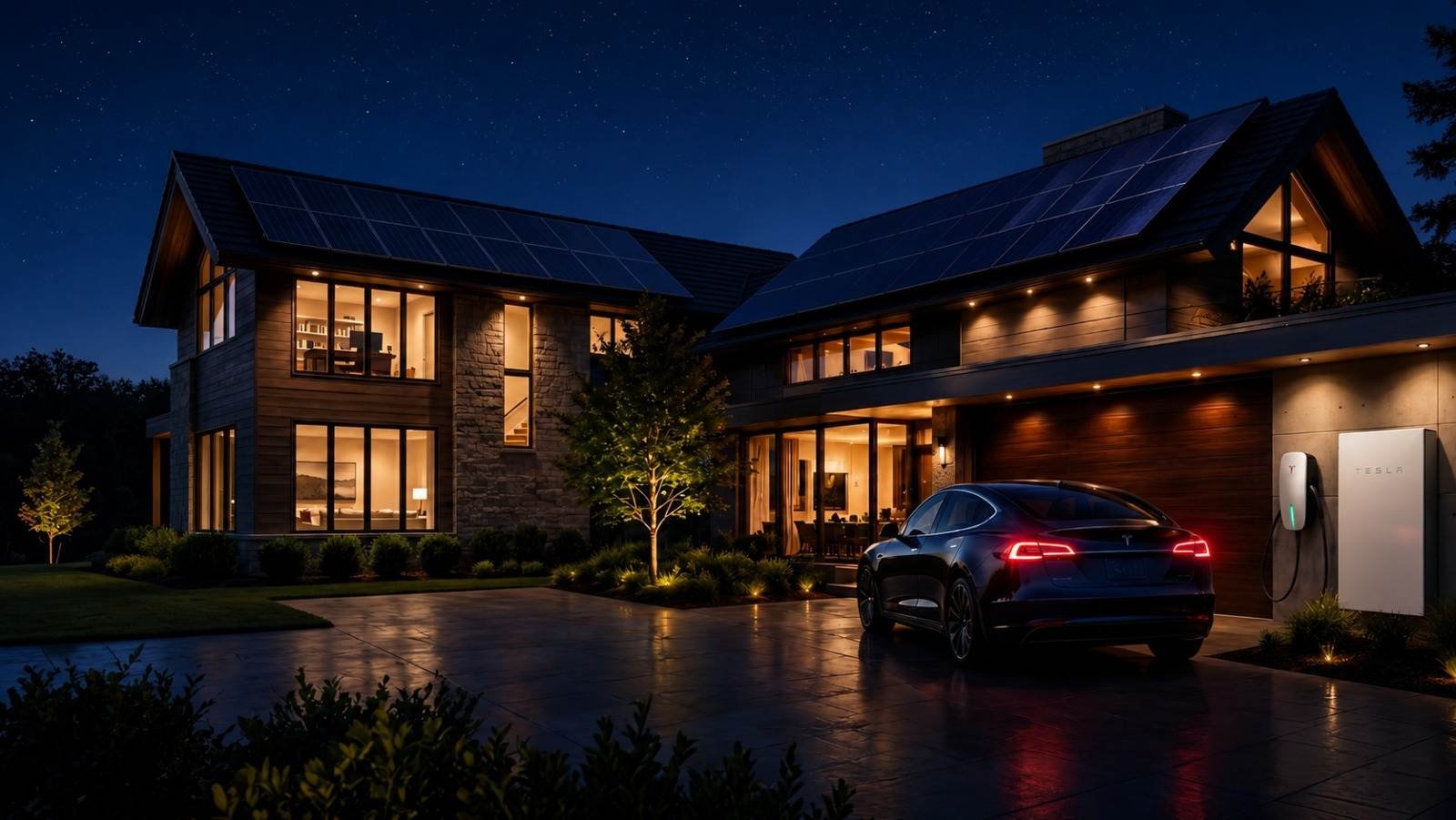
Tesla Wall Connector vs Supercharger: Which Should You Use?
If you drive a Tesla, you'll charge two very different ways: the Tesla Wall Connector at home and Superchargers on the road. They sound similar, but they're built for completely different jobs, and understanding the difference saves you money and hassle.
The short version: the Wall Connector is for everyday charging at home, and Superchargers are for long trips. For the vast majority of your driving, home charging is faster, cheaper, and far more convenient. Let's break down exactly why.
It's a question almost every new Tesla owner asks in their first week, usually after an expensive Supercharger session makes them wonder if there's a cheaper way. There is, and it's sitting in your garage waiting to be installed. By the end of this guide you'll know exactly when to use each, and how much you stand to save.
New to charging in general? Our guide to Level 1 vs Level 2 charging covers the fundamentals first.
The fundamental difference: AC vs DC charging
The core distinction is the type of power. The Wall Connector is a Level 2 AC charger, it supplies alternating current that your car's onboard charger converts to charge the battery. Superchargers are DC fast chargers that send direct current straight to the battery, bypassing the onboard charger for much higher speeds.
That's why a Supercharger can add 200 miles in 15 minutes while a home charger takes hours. But fast DC charging is expensive to build and use, which is why it lives at public stations, not in your garage.
What is the Tesla Wall Connector?
The Tesla Wall Connector is a hardwired home charger that delivers up to 48 amps, about 44 miles of range per hour. Plug in when you get home, and your car is full by morning. It's the foundation of stress-free EV ownership.
For a deeper comparison with other home chargers, see Tesla Wall Connector vs other EV chargers, and for the portable alternative, Wall Connector vs Mobile Connector.
What is a Supercharger?
Superchargers are Tesla's network of public DC fast chargers, placed along highways and in cities for travel and quick top-ups. Depending on the version (V2, V3, or V4) and your vehicle, they deliver up to 250 kW or more, enough to add a couple hundred miles in the time it takes to grab a coffee.
They're brilliant for road trips. But they're not designed for daily use, and relying on them for everyday charging is both slower (you have to drive there and wait) and more expensive than charging at home.
Speed comparison
On raw speed, there's no contest, but raw speed isn't the whole story, because home charging happens while you sleep.
| Wall Connector (home) | Supercharger (public) | |
|---|---|---|
| Type | Level 2 AC | DC fast |
| Speed | ~44 miles/hour | Up to ~200 miles/15 min |
| Where | Your garage/driveway | Public stations |
| Best for | Daily overnight charging | Road trips, quick top-ups |
| You wait? | No, charges while you sleep | Yes, at the station |
Cost comparison: home charging wins big
This is where the Wall Connector really pulls ahead. Charging at home costs far less per kWh than Supercharging, and overnight off-peak rates push the savings further.
Consider a driver covering 1,000 miles a month. At home, that might cost around $45–$50 a month. The same miles on Superchargers could cost roughly twice that, depending on local pricing and rates. Over a year, charging at home instead of Supercharging can save hundreds of dollars.
Want to run your own numbers? Use our EV charging savings calculator to compare home, Supercharger, and gasoline costs side by side.
The savings add up
Most Tesla owners do 90% or more of their charging at home precisely because it's so much cheaper. Superchargers are a convenience for travel, not an everyday cost you want to absorb.
Convenience and daily life
Beyond cost, the biggest advantage of a home Wall Connector is that you never think about charging. You plug in at night and wake up to a full battery every morning, no detours, no waiting, no apps.
Supercharging, by contrast, means driving to a station and waiting, however briefly. Fine occasionally; tedious as a daily routine. The Wall Connector turns 'where do I charge?' into a non-question.
What about battery health?
There's a common question about whether fast charging hurts your battery. Occasional Supercharging is perfectly fine and built into how Teslas are designed. However, charging primarily on Level 2 at home is gentler on the battery over the long term, and Tesla itself recommends home charging as your daily default.
So the home-first approach isn't just cheaper and more convenient, it's also a little kinder to your battery's long-term health.
Supercharger versions explained
Not all Superchargers are equal. Tesla has rolled out several generations, and the version you plug into affects your charging speed.
- V2 Superchargers, up to 150 kW; the original widespread network
- V3 Superchargers, up to 250 kW; far faster, now common
- V4 Superchargers, the newest, with higher power and longer cables, increasingly open to non-Tesla EVs
A real-world charging routine
Here's how home and Supercharging fit together in practice. Most Tesla owners plug into their Wall Connector every evening, set a charge limit (often 80% for daily use), and never think about it again, the car is ready each morning.
On a road trip, the picture flips. You let the car's navigation route you through Superchargers, top up for 15–20 minutes while you stretch and grab food, and continue. The two systems complement each other perfectly: home for the 95% of driving that's local, Superchargers for the occasional long haul.
What about other public chargers?
Superchargers aren't your only option away from home. Public Level 2 chargers (J1772) at workplaces, malls, and garages are great for slower top-ups while you're parked anyway, and non-Tesla DC fast chargers (CCS) are increasingly accessible to Teslas with an adapter.
Still, none of these replace the convenience of charging in your own garage. They're useful supplements, the home Wall Connector remains the backbone of low-cost, zero-effort charging.
Charging from your own solar
Home charging gets even cheaper when you generate your own power. Pairing a Wall Connector with solar panels, and ideally a battery, lets you charge your car on sunshine instead of grid power, driving your cost per mile close to zero.
Add a Tesla Powerwall and you can store solar by day and charge the car at night from your own stored energy. It's the ultimate version of the home-charging advantage, and something no Supercharger can match.
When to use each: a simple rule
- Daily driving and overnight charging → Wall Connector at home
- Road trips and long-distance travel → Superchargers along the way
- Quick top-up when away from home → Supercharger or public Level 2
- Apartment with no home charging yet → public charging until you can install one
- Want the cheapest cost per mile → charge at home on off-peak rates
Wall Connector vs Supercharger: pros and cons
Pros
- + Home: cheapest cost per mile
- + Home: charges while you sleep, zero effort
- + Home: gentler on the battery long-term
- + Supercharger: unbeatable for road trips
Cons
- – Home: requires a one-time install
- – Supercharger: more expensive per kWh
- – Supercharger: you drive there and wait
- – Supercharger: not ideal as a daily habit
Understanding your cost per mile
The clearest way to compare charging options is cost per mile. It strips out battery sizes and confusing kWh figures, and focuses on what you'll actually pay to drive. Here's a simplified look, assuming an EV that averages about 3.5 miles per kWh.
| Charging method | Cost per kWh | Cost per mile |
|---|---|---|
| Home (off-peak rate) | ~$0.12 | ~3.4¢ |
| Home (standard rate) | ~$0.17 | ~4.9¢ |
| Supercharger | ~$0.30–$0.50 | ~9–14¢ |
| Gasoline (28 mpg at $3.60/gal) | - | ~12.9¢ |
What the cost-per-mile numbers really mean
Look closely and the pattern is clear. Charging at home, especially on an off-peak rate, costs a fraction of Supercharging and a fraction of gasoline. Supercharging is competitive with gas, but it's the most expensive way to charge an EV.
Multiply those pennies across 12,000–15,000 miles a year, and the gap becomes hundreds of dollars annually. That's the financial case for home charging in a single table, and it's why a one-time Wall Connector install pays for itself.
Planning your home charging setup
Setting up home charging well takes a little planning, and it pays off for years. Think about where your car parks, where your electrical panel sits, and whether you might add a second EV down the road.
A good installer walks the site with you, checks your panel capacity, and recommends the right charger and circuit, including any panel upgrade if your panel is full. Our guide to EV charger installation cost covers what to budget so there are no surprises.
Installing a Wall Connector
Setting up home charging is a one-time project with a lifetime of payoff. A licensed electrician installs a dedicated 240-volt circuit, mounts and wires the Wall Connector, pulls the permit, and schedules inspection. Most installs run $400–$1,500.
Don't forget the incentives: the federal charger credit has expired, but plenty of utilities still rebate part of the cost. Check what you qualify for with our Savings Finder or EV charger rebates guide.
Common charging myths, debunked
A few persistent myths make new EV owners overthink charging. Let's clear them up.
- 'I need fast charging to keep up', false; overnight Level 2 charging covers daily driving easily
- 'Home charging is too slow', it's slow per hour, but you're asleep for all of it
- 'Fast charging always ruins the battery', occasional Supercharging is fine; home charging is simply gentler long-term
- 'I can't charge at an apartment', increasingly you can, via 240V outlets or building chargers; see your right-to-charge options
- 'Charging costs as much as gas', at home it's typically half the cost or less
Why home charging changes EV ownership
Once you have a Wall Connector, EV ownership transforms. You stop planning your week around charging stations and start treating your car like your phone, plug it in at night, unplug it full in the morning, and rarely think about it.
That shift, more than any single spec, is why so many EV owners say they'd never go back to gas. The mental load of finding fuel simply disappears. Your 'gas station' is now your own garage, and it's open every night at the cheapest possible price.
Superchargers make road trips possible and stress-free; the home Wall Connector makes everyday ownership effortless. Together, they cover every mile you'll ever drive, which is exactly why the smartest setup uses both, each for what it does best.
The bottom line
Install a Wall Connector for everyday charging and use Superchargers for travel. The convenience and savings of waking up to a full battery make home charging the foundation of EV ownership, Superchargers are the powerful backup for the open road.
Ready to set up home charging? Charge Home Solutions installs Tesla Wall Connectors nationwide with permits and inspection included. Get a free in-home estimate to see your exact price.
Frequently asked questions
Charging at home is significantly cheaper. Home electricity costs far less per kWh than Supercharger pricing, and overnight off-peak rates save even more. Over a year, home charging can save a typical driver hundreds of dollars.
Much faster, a Supercharger can add up to about 200 miles in 15 minutes (DC fast charging), while a Wall Connector adds about 44 miles per hour (Level 2). But because home charging happens overnight while you sleep, the Wall Connector is more than fast enough for daily driving.
Occasional Supercharging is perfectly fine and built into how Teslas are designed. That said, charging primarily on Level 2 at home is gentler on the battery over the long term, which is why Tesla recommends home charging as your daily default.
You can, but it's not ideal, it's more expensive per kWh and means driving to a station and waiting regularly. A home Wall Connector is cheaper and far more convenient for everyday charging.
Yes, for most owners. A home Wall Connector saves money, charges while you sleep, and is gentler on your battery. Nearby Superchargers are a great convenience for travel, but not a substitute for home charging.
Supercharger pricing varies by location and time, and can roughly double the cost of charging the same miles at home. Tesla's app shows current pricing at each station.
No. A Wall Connector is a Level 2 AC charger (up to 48 amps), while Superchargers are DC fast chargers that bypass your car's onboard charger. The Wall Connector is built for overnight home charging, not minutes-long top-ups.
Install a Tesla Wall Connector at home, plug in each night, and wake up to a full battery, using Superchargers only for road trips. It's the cheapest, most convenient, and most battery-friendly approach.
Related guides
Tesla Wall Connector vs Mobile Connector
Which Tesla home charging option is right for you, speed, cost, and convenience compared.
Read article →Tesla Wall Connector vs Other EV Chargers: Which Is Best?
How the Tesla Wall Connector compares to ChargePoint, Grizzl-E, Emporia, and other Level 2 home chargers on speed, features, and value.
Read article →Tesla Wall Connector Installation: Complete Guide
The Tesla Wall Connector is a Level 2 home charger that adds up to about 44 miles of range per hour at 48 amps. Installation involves a dedicated 240-volt circuit, hardwiring the unit, a load calculation...
Read article →How to Charge a Tesla at Home (Setup Guide)
To charge a Tesla at home you have two options: the Level 1 Mobile Connector, which plugs into a standard outlet and charges slowly, or a hardwired Level 2 Wall Connector, which charges much faster. Most...
Read article →How Much Does EV Charger Installation Cost in 2026?
A full breakdown of Level 2 home EV charger installation costs, what drives the price, and how to save.
Read article →Level 1 vs Level 2 EV Charging: Which Do You Need?
The real-world difference between Level 1 and Level 2 home charging speeds and costs.
Read article →