


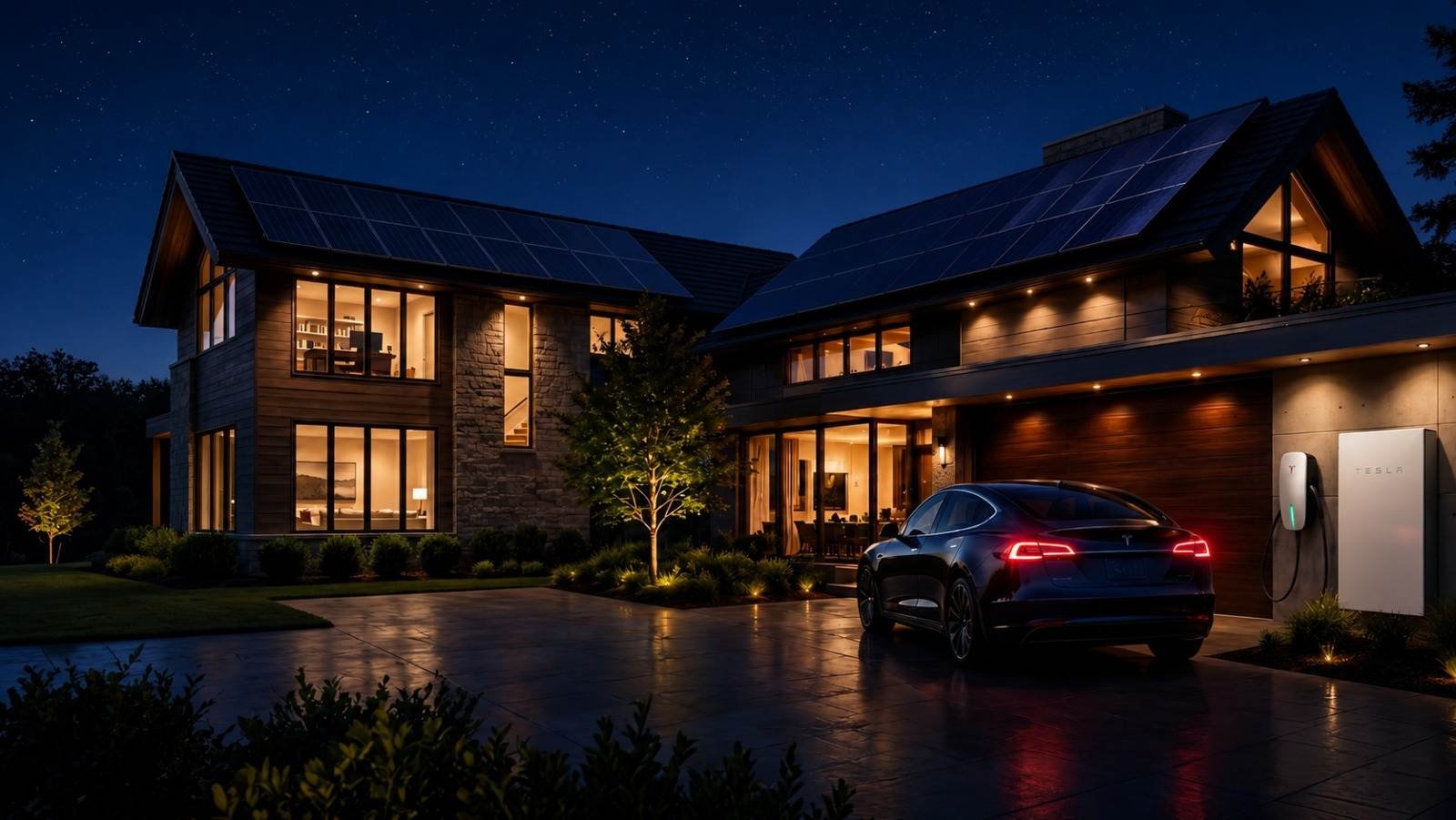
Tesla Wall Connector vs Other EV Chargers: Which Is Best?
Choosing between the Tesla Wall Connector vs other EV chargers is one of the first decisions new EV owners face, and it's an important one. Your home charger is what you'll use almost every day for the next decade, so speed, reliability, and ease of use matter far more than the sticker price.
The short answer: the Tesla Wall Connector is the best home charger for most Tesla owners, and a strong option for many other drivers too. But it isn't automatically the right pick for everyone. In this guide we compare it head-to-head with the leading Level 2 home chargers, ChargePoint, Grizzl-E, Emporia, and JuiceBox, on speed, features, build quality, and value, so you can choose with confidence.
If you're brand new to home charging, it helps to first understand Level 1 vs Level 2 charging, the difference between a slow wall outlet and a proper home charger.
What is the Tesla Wall Connector?
The Tesla Wall Connector is a hardwired Level 2 (240-volt) home charger. It delivers up to 48 amps of power, roughly 44 miles of range per hour, which is enough to fully recharge nearly any EV overnight. It uses Tesla's NACS connector and pairs with the Tesla app for scheduling, monitoring, and over-the-air updates.
At around $475 for the unit (plus professional installation), it sits in the mid-range on price while offering top-tier charging speed. That combination of speed and value is a big part of why it's so popular.
Tesla has released several generations of the Wall Connector. The current model adds Wi-Fi, power sharing, and a longer cable. Here are the specs that matter most:
- Power output: up to 48 amps / 11.5 kW on a 60-amp circuit
- Cable length: 24 feet, among the longest available
- Connector: NACS (Tesla); the Universal model adds J1772
- Connectivity: Wi-Fi with Tesla-app control and updates
- Rating: indoor and outdoor (weatherproof) installation
- Warranty: 4 years (residential use)
Tesla Wall Connector vs other EV chargers: comparison table
Here's how the most popular Level 2 home chargers stack up. All deliver similar charging speeds at the same amperage, the real differences are in connector type, smart features, build, and price.
| Charger | Max amps | Connector | Smart app | Approx. price |
|---|---|---|---|---|
| Tesla Wall Connector | 48 A | NACS (Tesla) | Yes, Tesla app | ~$475 |
| Tesla Universal Wall Connector | 48 A | NACS + J1772 | Yes, Tesla app | ~$595 |
| ChargePoint Home Flex | 50 A | J1772 (any EV) | Yes, robust app | ~$549–$699 |
| Grizzl-E Classic | 40 A | J1772 (any EV) | No (Smart model extra) | ~$425 |
| Emporia | 48 A | J1772 (any EV) | Yes, load mgmt | ~$399 |
| JuiceBox 40 | 40 A | J1772 (any EV) | Yes | ~$499–$649 |
What makes the Tesla Wall Connector stand out
- Fast 48-amp charging, among the quickest Level 2 home charging available
- Long 24-foot cable, reaches across a garage or to either side of the car
- Power sharing, multiple units share one circuit for multi-EV homes
- Clean design, one of the best-looking chargers on the wall
- Tesla app integration, scheduling, charge stats, and updates built in
- Competitive price, typically cheaper than ChargePoint or JuiceBox
Tesla Wall Connector: pros and cons
Pros
- + Excellent 48 A charging speed
- + Sleek, durable, indoor/outdoor rated
- + Great value for Tesla owners
- + Power sharing for multiple cars
- + Long cable and clean cable management
Cons
- – Standard model only fits Tesla (NACS)
- – Smart features are Tesla-app centric
- – Non-Tesla owners need the pricier Universal model
How the competitors compare
ChargePoint Home Flex
The closest all-around rival. It works with any EV via J1772, offers up to 50 amps, and has one of the best apps in the category. The trade-off is a higher price. If you don't own a Tesla, it's often the top pick, particularly for households that value a mature, reliable app with detailed charging history and reminders.
Grizzl-E Classic
A rugged, no-frills, value champion. It's nearly indestructible and cheap, but the base model has no app. Choose it if you want simple, durable charging and don't care about smart features. It's also a favorite for cold climates, where its tough construction and reliability shine through harsh winters.
Emporia
The budget smart pick. It delivers 48 amps with app control and built-in load management at the lowest price of the group, great if you want smart charging on a tight budget. Its built-in load management is a standout, letting it share capacity with other large loads so some homes can avoid a panel upgrade.
JuiceBox 40
A solid Wi-Fi charger with good scheduling, though at 40 amps it's slightly slower than the 48-amp units and priced higher than Emporia. It remains a popular, well-supported choice with a long track record and broad smart-home integration, including Amazon Alexa.
Tesla vs non-Tesla EVs: which connector do you need?
This is the single most important factor. The standard Wall Connector uses Tesla's NACS plug. If you drive a non-Tesla EV, a Ford, Hyundai, Rivian, or others, you have two good paths.
Option one: the Tesla Universal Wall Connector, which adds a built-in J1772 adapter so any North American EV charges at full speed. Option two: a J1772 charger like ChargePoint or Emporia. Both work well; the Universal Wall Connector keeps Tesla's design and app, while a third-party J1772 unit may cost less.
Buying for a mixed-EV household?
If your driveway has both a Tesla and another brand, the Tesla Universal Wall Connector or a J1772 charger like ChargePoint Home Flex is the safest future-proof choice, every car charges at full speed from one unit.
How fast does the Tesla Wall Connector actually charge?
Miles of range per hour
At its full 48 amps, the Tesla Wall Connector adds roughly 44 miles of range per hour. So a typical EV with a 300-mile battery goes from nearly empty to full in about seven hours, comfortably overnight. Even on a smaller 40-amp circuit, you'll still add around 37 miles per hour, which is plenty for most daily driving.
Your car's onboard charger is the real limit
Here's what many buyers miss. A home charger can only deliver power as fast as your vehicle accepts it. Most EVs have an onboard charger rated for 11 kW (48 amps) or less. If your car tops out at 7.7 kW, a 48-amp wall unit won't charge it any faster than a 32-amp one. Always check your vehicle's onboard charger rating before paying extra for the fastest charger. You can model your exact times with our EV charging time calculator.
What does charging at home actually cost?
Charging at home is dramatically cheaper than gas, and usually cheaper than public charging too. The exact figure depends on your electricity rate and how far you drive, but a simple example shows the scale.
Say you drive 1,000 miles a month, and your EV averages about 3.5 miles per kWh. That works out to roughly 285 kWh a month. At a national-average rate near $0.17 per kWh, you'd spend about $48 a month, often less than half what the same miles cost in gasoline.
Charging overnight on a time-of-use plan pushes that cost lower still. To run your own numbers, try our EV charging savings calculator and compare home charging against gas and public stations.
The takeaway
Over a year, charging at home instead of relying on public fast chargers can save a typical driver hundreds of dollars, which quickly offsets the cost of the charger and its installation.
Smart features and off-peak scheduling
Modern home chargers do far more than push electricity. Through the Tesla app, or a third-party app for other brands, you can schedule charging to start automatically during cheaper off-peak hours, set charge limits, and track your energy use over time.
Off-peak scheduling is where the real savings hide. Many utilities charge much less for power late at night. Telling your charger to wait until, say, midnight can cut your charging bill noticeably without you lifting a finger.
And if you have, or plan to add, a Tesla Powerwall, smart charging gets even better. You can prioritize charging from stored solar energy instead of pulling from the grid during expensive peak hours.
How to choose the right home charger: a quick checklist
- Confirm your EV's connector, NACS (Tesla) or J1772 (most others)
- Pick at least a 40 A charger; 48 A future-proofs you
- Decide if you want smart scheduling to charge on cheap off-peak rates
- Measure the distance from your electrical panel to the parking spot
- Check whether your panel has spare capacity or needs an upgrade
- Plan for a hardwired install (cleaner, required outdoors in some areas)
- Budget for professional installation, not just the charger
Installation, permits, and cost
Whichever charger you choose, the installation determines whether you actually get full, safe charging speed. A home charger needs a dedicated 240-volt circuit, a correctly sized breaker, an electrical permit, and a final inspection.
Most installs run $400–$1,500, see our full breakdown of EV charger installation costs. If your panel is full, you may also need a panel upgrade, which adds to the total. Want to estimate charging time for your specific car? Try our EV charging time calculator.
A licensed electrician sizes the circuit to your charger and panel, pulls the permit, and ensures the install passes inspection the first time, protecting your warranty and your home.
Rebates that lower the cost
Don't pay full price. The federal charger credit ended for equipment placed in service after June 30, 2026, but utility rebates remain common and some states run their own charger programs. You can read more at the U.S. Department of Energy's Alternative Fuels Data Center.
To see every incentive you qualify for, state and utility alike, use our free Savings Finder or browse current EV charger rebates.
Common mistakes to avoid when buying a home charger
After thousands of installations, our electricians see the same avoidable mistakes again and again. A little planning up front saves money and headaches later.
- Buying the fastest charger your car can't use, match the amperage to your vehicle's onboard charger
- Forgetting about panel capacity, a full panel may need an upgrade before any charger goes in
- Choosing the wrong connector, confirm NACS vs J1772 for your specific EV
- Skipping the permit, unpermitted work can void insurance and complicate a home sale
- Underestimating cable length, measure from the panel to where the car's charge port actually sits
- Attempting a DIY 240V circuit, high-amperage wiring is a genuine safety and code risk best left to a licensed electrician
The bottom line: which charger should you buy?
For Tesla owners, the Wall Connector is the clear winner, fast, clean, affordable, and perfectly integrated. For non-Tesla drivers, the Tesla Universal Wall Connector or ChargePoint Home Flex lead, with Emporia the best budget smart option and Grizzl-E the toughest value pick. Still weighing options? Our guide to the best home EV chargers goes deeper on each.
Whatever you choose, the install is what makes it safe and fast. Charge Home Solutions is a network of licensed, Tesla-certified electricians who install any Level 2 charger nationwide, with permits, inspection, and a workmanship guarantee included. Get a free in-home estimate to see your exact price.
Frequently asked questions
For most homeowners, yes. At around $475 it's competitively priced, delivers a full 48 amps, has a long 24-foot cable, and supports power sharing. Cheaper units like Emporia save a little up front but the Wall Connector's build quality and integration are hard to beat, especially for Tesla owners.
The standard Wall Connector uses Tesla's NACS connector and is intended for Teslas. To charge a non-Tesla EV (like a Ford, Hyundai, or Rivian), choose the Tesla Universal Wall Connector, which has a built-in J1772 adapter and works with every EV sold in North America.
On a 60-amp circuit it delivers up to 48 amps, about 44 miles of range per hour, or a full overnight charge for nearly any EV. The exact speed also depends on your vehicle's onboard charger.
Yes. The Wall Connector requires a dedicated 240-volt circuit, correct breaker sizing, an electrical permit, and an inspection. A licensed electrician ensures it's done safely and to code.
The Wall Connector is a permanently mounted 48-amp charger for daily home use. The Mobile Connector is a portable 32-amp unit meant for occasional or travel charging. For everyday charging, the Wall Connector is significantly faster and more convenient.
Installation typically runs $400–$1,500 depending on your panel's capacity and the distance from the panel to the charger. Homes needing a panel upgrade pay more. You'll get an exact price after a free in-home assessment.
Not anymore. The federal EV charger credit ended for equipment placed in service after June 30, 2026, so installs today can't claim it. Utility and state EV charger rebates are still widely available, and they're now the main way to bring the price down.
Both are excellent. ChargePoint Home Flex works with any EV out of the box and has a robust app, but costs more. The Tesla Wall Connector is faster to set up for Tesla owners, cheaper, and cleaner-looking. Mixed-EV homes often prefer ChargePoint or the Tesla Universal Wall Connector.
Related guides
Tesla Wall Connector vs Mobile Connector
Which Tesla home charging option is right for you, speed, cost, and convenience compared.
Read article →Tesla Wall Connector vs Supercharger: Which Should You Use?
The difference between home Wall Connector charging and public Superchargers, speed, cost, and when to use each.
Read article →Tesla Wall Connector Installation: Complete Guide
The Tesla Wall Connector is a Level 2 home charger that adds up to about 44 miles of range per hour at 48 amps. Installation involves a dedicated 240-volt circuit, hardwiring the unit, a load calculation...
Read article →How to Charge a Tesla at Home (Setup Guide)
To charge a Tesla at home you have two options: the Level 1 Mobile Connector, which plugs into a standard outlet and charges slowly, or a hardwired Level 2 Wall Connector, which charges much faster. Most...
Read article →How Much Does EV Charger Installation Cost in 2026?
A full breakdown of Level 2 home EV charger installation costs, what drives the price, and how to save.
Read article →Level 1 vs Level 2 EV Charging: Which Do You Need?
The real-world difference between Level 1 and Level 2 home charging speeds and costs.
Read article →